They move soundlessly through the grass.
They strike faster than the blink of an eye.
And in just a few drops of venom — death.
Snakes have always inspired both fascination and fear. With more than 3,000 species slithering across the globe (everywhere except Antarctica), these reptiles play a crucial role in nature’s balance. They keep rodent populations in check, prevent the spread of disease, and even provide venom that saves human lives.
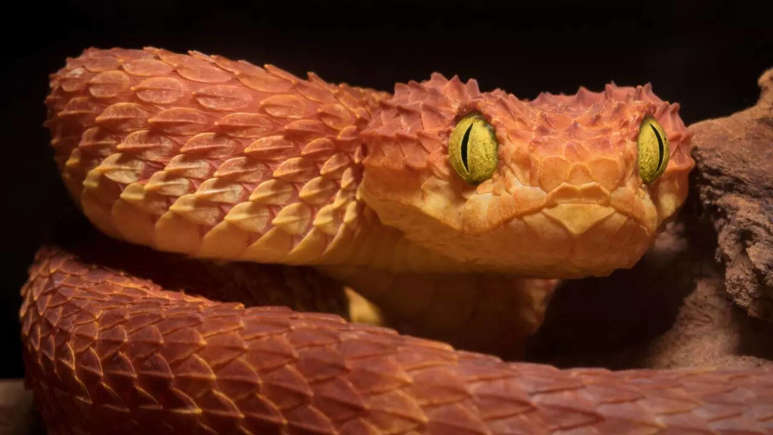
But among them, there are a few whose power is beyond comprehension — the deadliest snakes on the planet.
These are the seven serpents whose bites can end a life in minutes.
7. The Black Mamba — Africa’s Lightning Death
Scientific name: Dendroaspis polylepis
Habitat: Sub-Saharan Africa
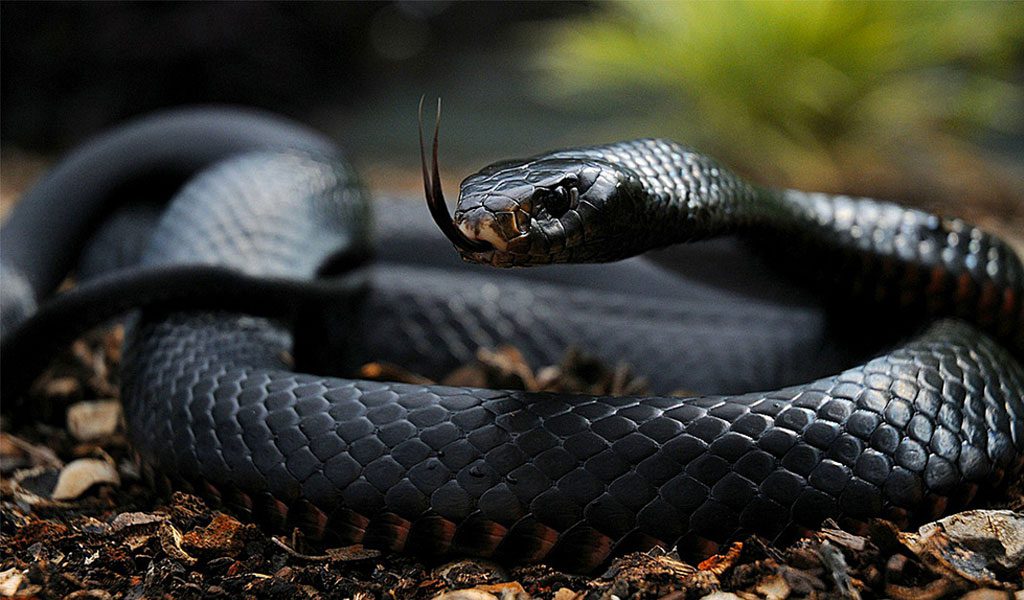
When locals whisper the name “Black Mamba,” it isn’t in admiration — it’s in fear.
Long, slender, and capable of reaching eight feet in length, this serpent is not only one of the most venomous but also the fastest snake on Earth, moving at speeds up to 12 mph.
Its mouth, jet-black inside, is the last thing most victims ever see. Without immediate treatment, a single bite has a 100% fatality rate.
Even Africa’s toughest bushmen step back when they hear the dry whisper of a Mamba sliding through the grass.
6. The Boomslang — The Tree of Death
Scientific name: Dispholidus typus
Habitat: Sub-Saharan Africa
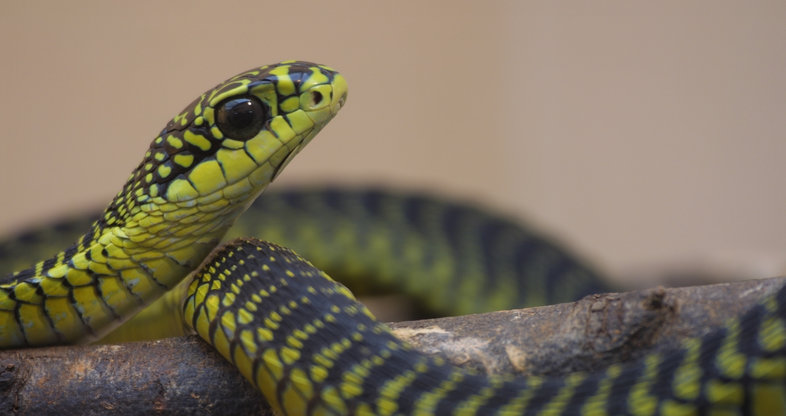
It hides in plain sight — still as a branch, eyes fixed on movement below.
The Boomslang is a master of camouflage and patience. When a bird or chameleon wanders too close, it strikes with terrifying precision.
Its venom causes internal bleeding and organ failure so severe that victims can die from hemorrhage within hours.
One drop — that’s all it takes.
5. The Tiger Snake — Australia’s Hidden Assassin
Scientific name: Notechis scutatus
Habitat: Southeastern Australia
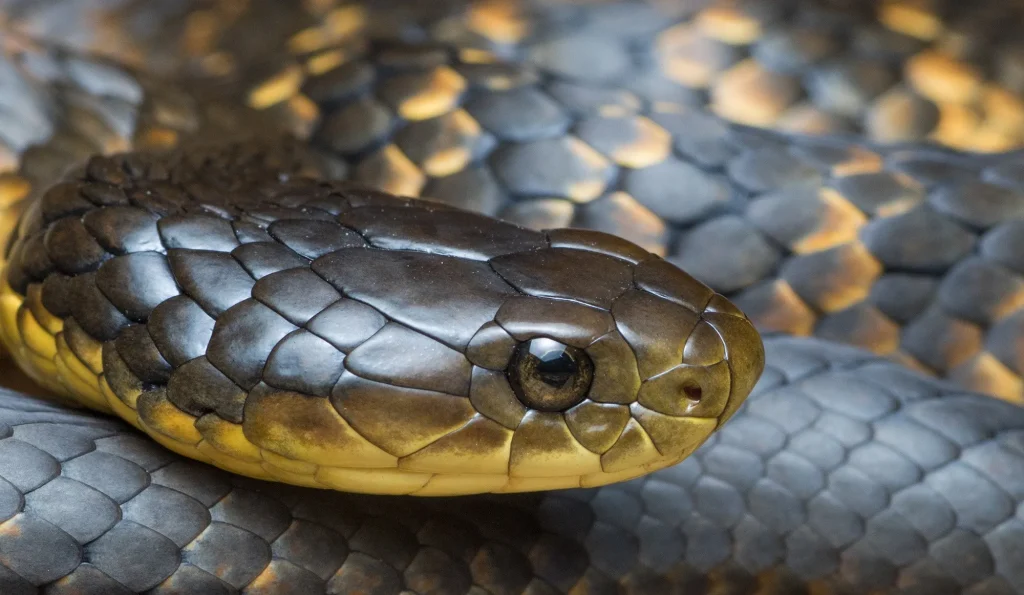
Found near rivers, swamps, and coastal plains, the Tiger Snake is as beautiful as it is deadly. Its body bears dark stripes over golden or brown scales — a warning painted by nature itself.
Though only about three feet long, it carries venom potent enough to paralyze the respiratory system within minutes.
Locals say you can spot one sunning itself near creeks — but it’s better not to look twice.
4. The Banded Krait — The Silent Night Stalker
Scientific name: Bungarus fasciatus
Habitat: Southeast Asia
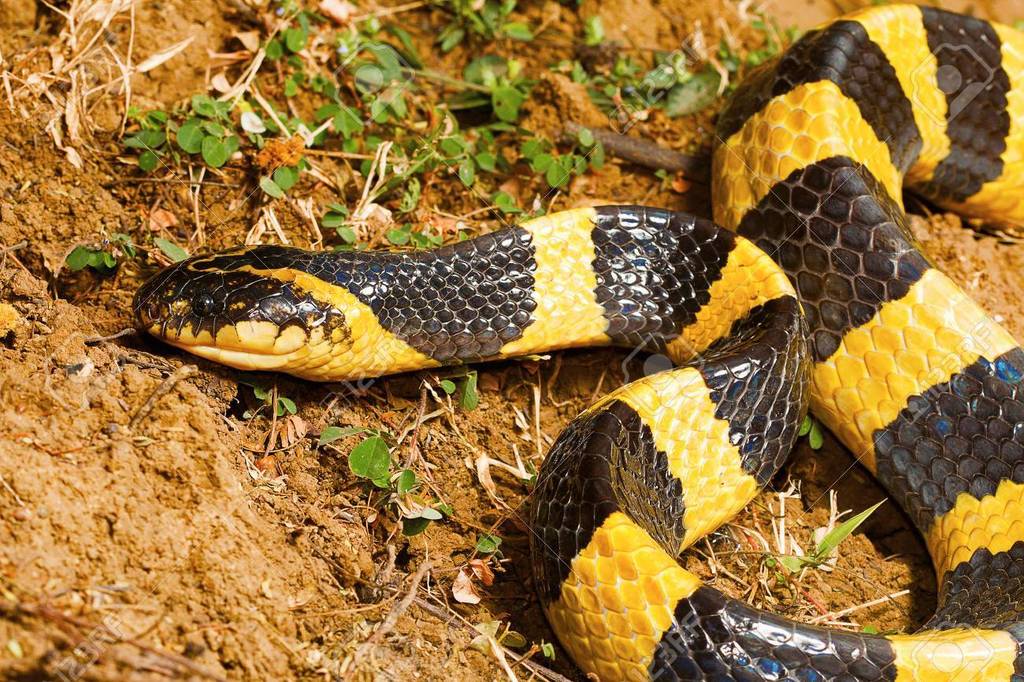
Bold, beautiful, and lethal — the Banded Krait wears alternating rings of black and yellow, like nature’s version of a hazard sign.
By day, it hides. By night, it hunts.
Its venom is neurotoxic, shutting down muscle control and eventually stopping the victim’s breathing. The snake rarely attacks unprovoked — but when it does, there’s almost no time to react.
Even cobras steer clear of this one.
3. The King Cobra — The Royal Executioner
Scientific name: Ophiophagus hannah
Habitat: Forests of India and Southeast Asia
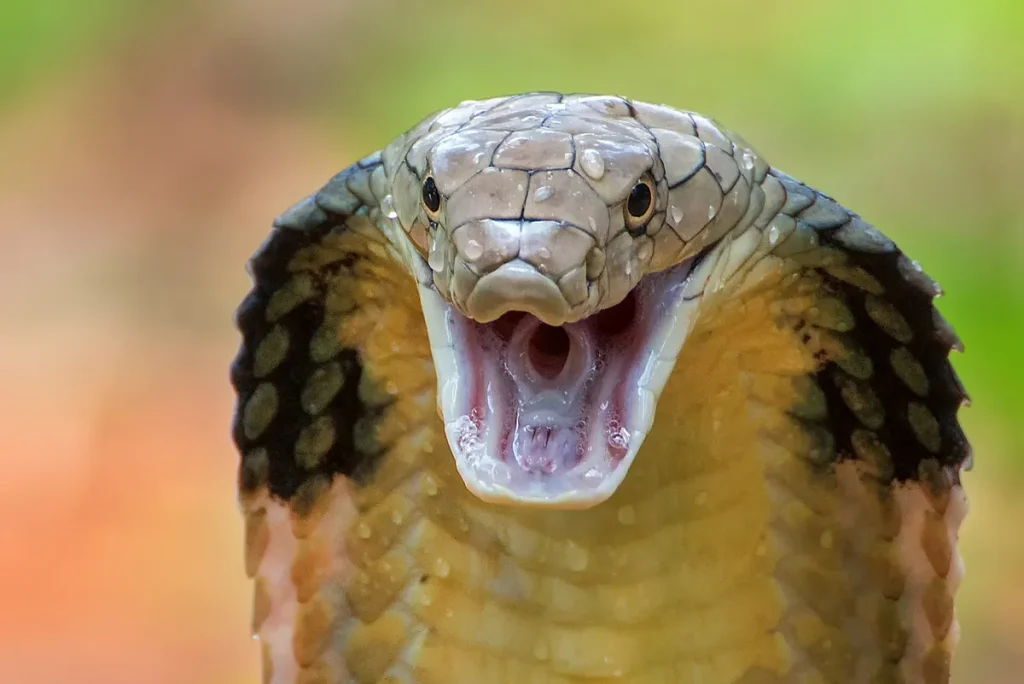
No other snake commands the same respect — or fear.
The King Cobra is the longest venomous snake in the world, capable of growing up to 18 feet. When threatened, it rises high enough to meet a human eye-to-eye, flaring its majestic hood and letting out a deep, chilling hiss.
Its venom is powerful enough to kill an elephant in three hours.
But this giant isn’t mindless — it’s intelligent, territorial, and fiercely protective of its eggs. In some cultures, the King Cobra is both feared and worshipped, a living god slithering through the jungle.
2. The Inland Taipan — The Quietest Killer
Scientific name: Oxyuranus microlepidotus
Habitat: Australia
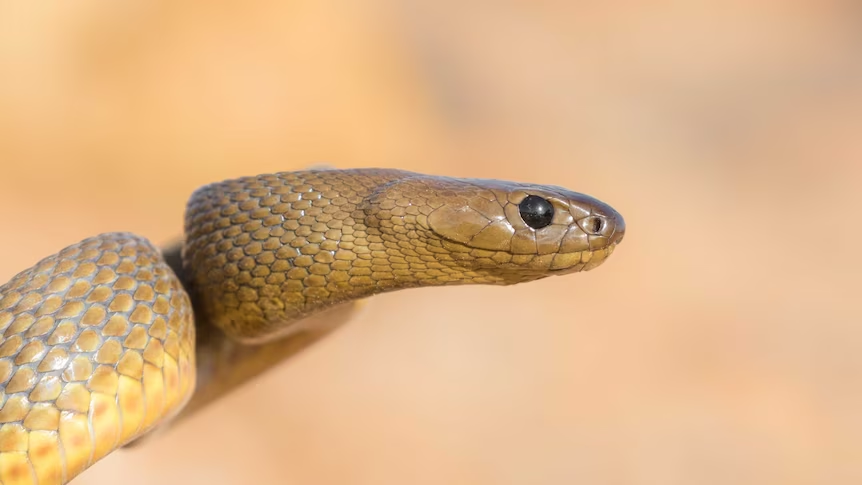
It doesn’t look intimidating. In fact, the Inland Taipan — sometimes called the “Fierce Snake” — is shy, elusive, and rarely seen by humans.
But make no mistake — this reptile’s bite contains the most potent venom of any land snake on Earth.
A single bite could kill 100 people. The toxin acts on the nervous system, stopping muscles, destroying tissue, and shutting down the lungs.
Thankfully, the Inland Taipan prefers to stay away from humans — a quiet reminder that sometimes the deadliest things come in silence.
1. The Saw-Scaled Viper — The Desert Demon
Scientific name: Echis carinatus
Habitat: Africa, Arabia, and South Asia
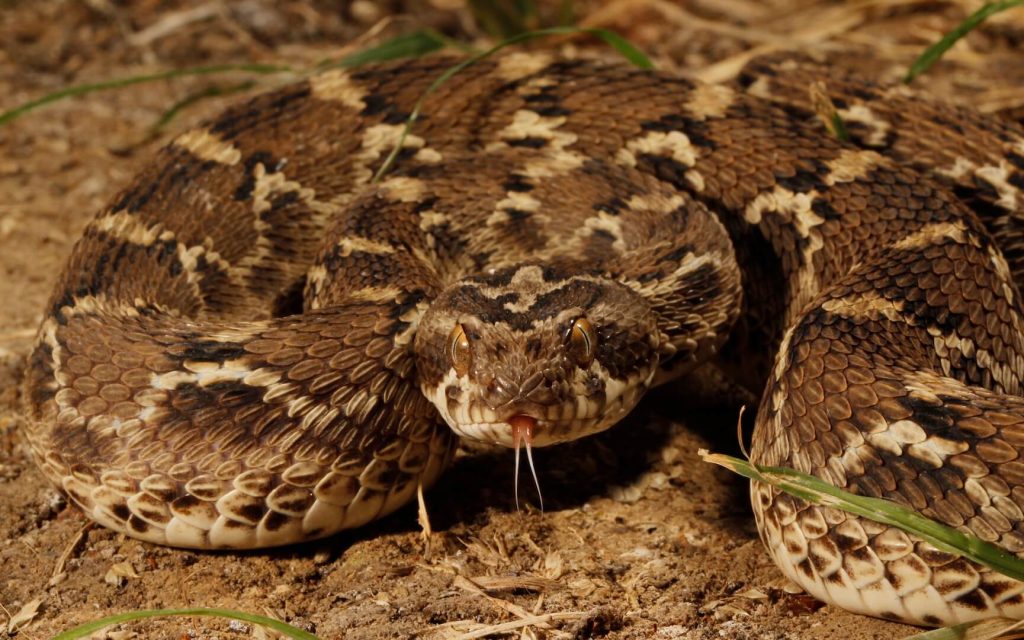
It’s small — just three feet long — but don’t let that fool you. The Saw-Scaled Viper is responsible for more human deaths than any other snake species on Earth.
When threatened, it rubs its scales together, creating a sinister “sizzling” sound — a deadly warning few live to hear twice.
Fast, irritable, and unpredictable, the Saw-Scaled Viper’s venom attacks the blood, causing massive internal bleeding.
Ironically, that same venom has helped save lives — it’s used to make Tirofiban, a medicine that prevents deadly blood clots in humans.
Nature’s cruel paradox: a killer that heals.
Beyond the Bite
Snakes are among Earth’s oldest survivors — silent architects of nature’s balance.
For millions of years, they’ve hunted, adapted, and evolved, serving as both predator and protector.
Their venom can destroy — but it can also heal.
Their presence can terrify — but without them, the world would fall into chaos.
So the next time you see a snake, remember:
What we fear most often plays a greater role than we dare to imagine.