
We trekked through dense brush until we reached a mossy clearing where a second bear lay motionless. She was a beautiful sow, but her breathing was shallow and her abdomen was swollen to an unnatural size. Her companion nudged her flank with a gentle, mournful groan that broke my heart.
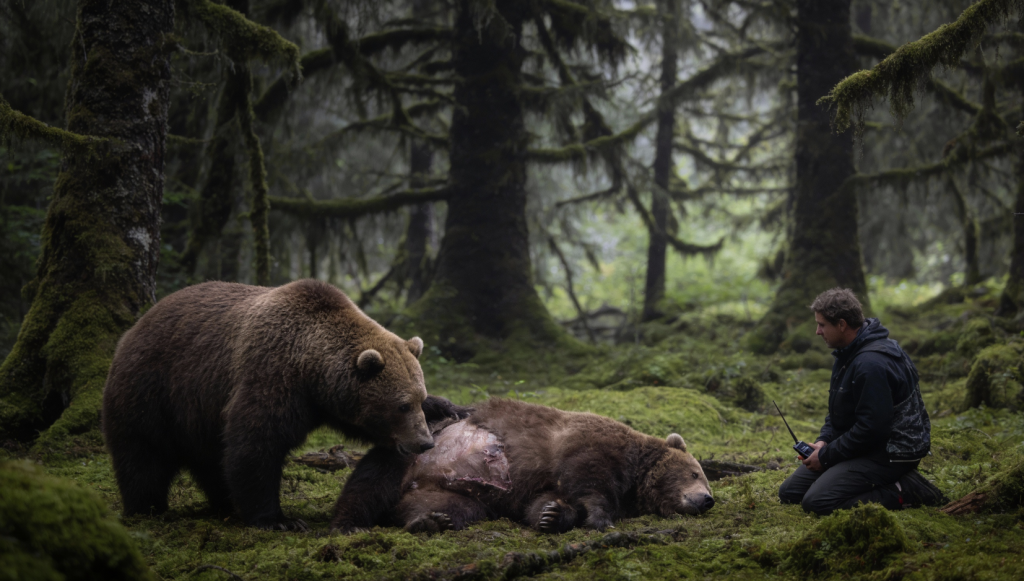
I knelt a few feet away, seeing the matted fur and the way her paws twitched in pain. She looked pregnant, but the distortion of her belly was jagged and lumpy, unlike any natural gestation. I reached for my satellite phone, knowing only one person could help out here.
“Dr. Aris, I’ve got a critical situation on the north spit,” I told the vet when she finally picked up. I described the swelling and the bizarre behavior of the male bear, who sat like a sentry beside us. She told me to stay put and keep the sow warm until she could fly in.
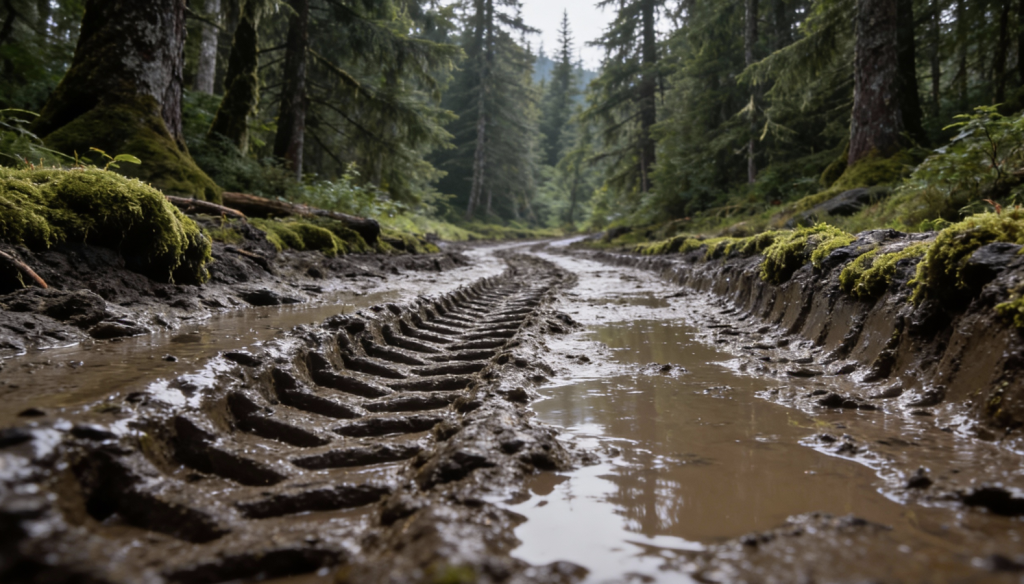
While I waited, I noticed deep, fresh tire tracks in the mud near the clearing—an impossible sight on an uninhabited island. There were no roads here, and no legal way to get a vehicle ashore. I realized then that I wasn’t the first human to visit this secret sanctuary.
The male bear suddenly stood upright, his ears pinned back as he sniffed the wind. He wasn’t looking at me, but toward the shoreline where I had left my boat. A low, mechanical hum began to vibrate through the trees, growing louder with every passing second.