
The operating theater was prepped with extra equipment usually reserved for trauma cases. The mood was tense; there was no casual chatter, only the rhythmic beeping of the cardiac monitor.
As Margaret was put under, Dr. Evans watched her eyes close. “See you on the other side, Margaret,” he whispered. He hoped it wasn’t a lie.
The first incision was made. The skin parted, and the true scale of the problem became visible immediately. It wasn’t just a tumor; it was a massive, encapsulated entity that seemed to have its own vascular system.
“Clamp,” the Chief ordered, his hand extended. “We have heavy bleeding. It’s attached to the liver.” The suction machine roared to life, clearing the field as red bloomed across the sterile drapes.
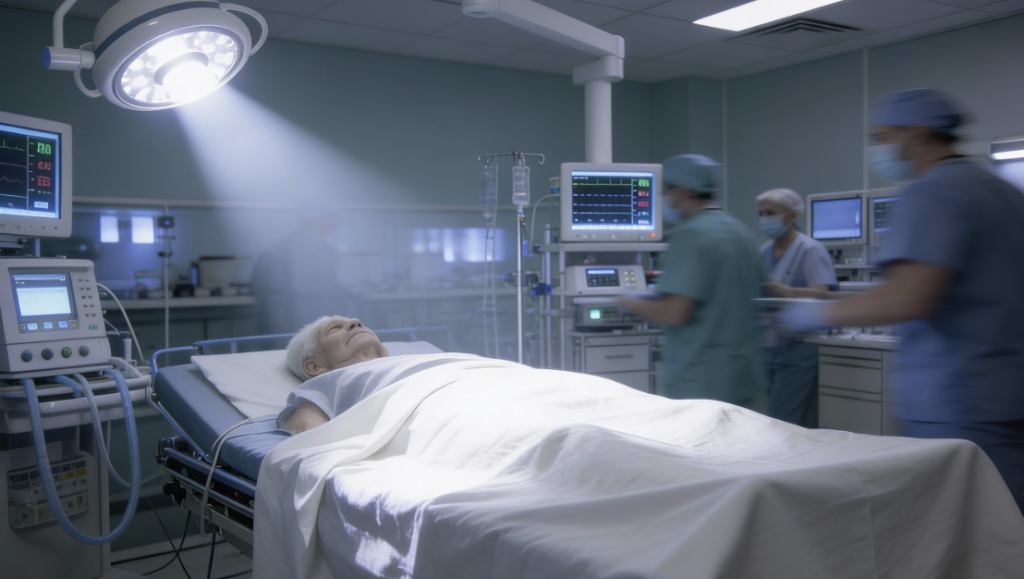
Hours ticked by. The team worked in shifts to maintain focus, dissecting the mass millimeter by millimeter. It was like defusing a bomb where the wires were made of veins and arteries.
“BP is dropping,” the anesthesiologist announced, his voice cutting through the concentration. “80 over 50. We’re losing her.” The monitor began to sound a rapid, high-pitched alarm.
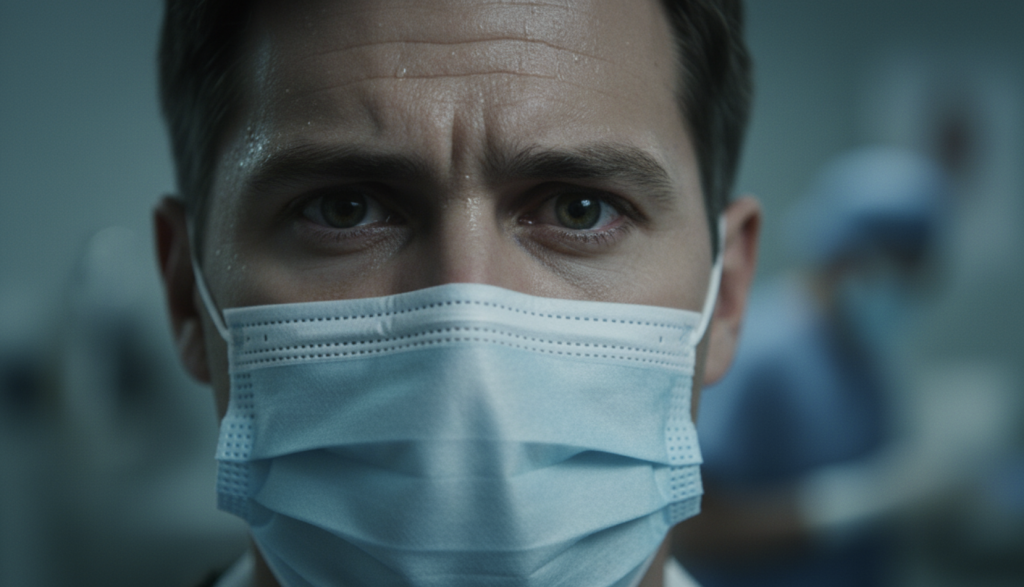
“Stop dissection,” the Chief commanded. “Pack the area. We need to stabilize.” The room froze. Dr. Evans looked at Margaret’s face, barely visible beneath the tubes and tape.
They pumped fluids and blood products, fighting to keep her circulation going. The massive void left by the parts they had already removed was causing her system to go into shock.
“Come on, Margaret,” Dr. Evans thought, watching the numbers flick up slowly. “Don’t give up now.” After ten agonizing minutes, the heart rate steadied. The surgery resumed.
Finally, the last adhesion was cut. The mass was free. It took two surgeons to lift it out of her body and place it into a large metal basin. The sound of it landing was a heavy, wet thud.