
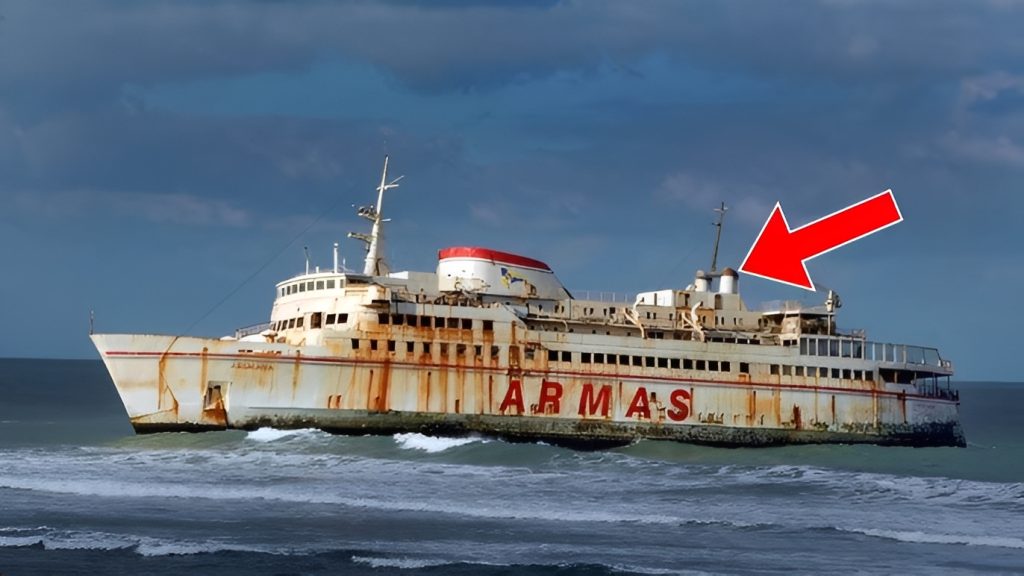
For over a year, the massive cruise liner sat wedged against a jagged reef, a rotting monument to a navigational disaster. Locals whispered that it was cursed, giving the rusted behemoth a wide berth. But when two seasoned divers finally decided to breach its decaying hull, they didn’t find ghosts. They uncovered a terrifying, breathing nightmare that officially “did not exist.”
The Lure of the Rusting Leviathan
To the world, the unnamed cruise ship was just another maritime insurance write-off waiting to be dismantled. Half-tilted on its side, its once-gleaming white hull was now streaked with aggressive, bleeding rust. Every time the ocean swelled, the water pushed against the compromised steel, forcing bubbles from deep cracks like the dying breaths of a mechanical whale.
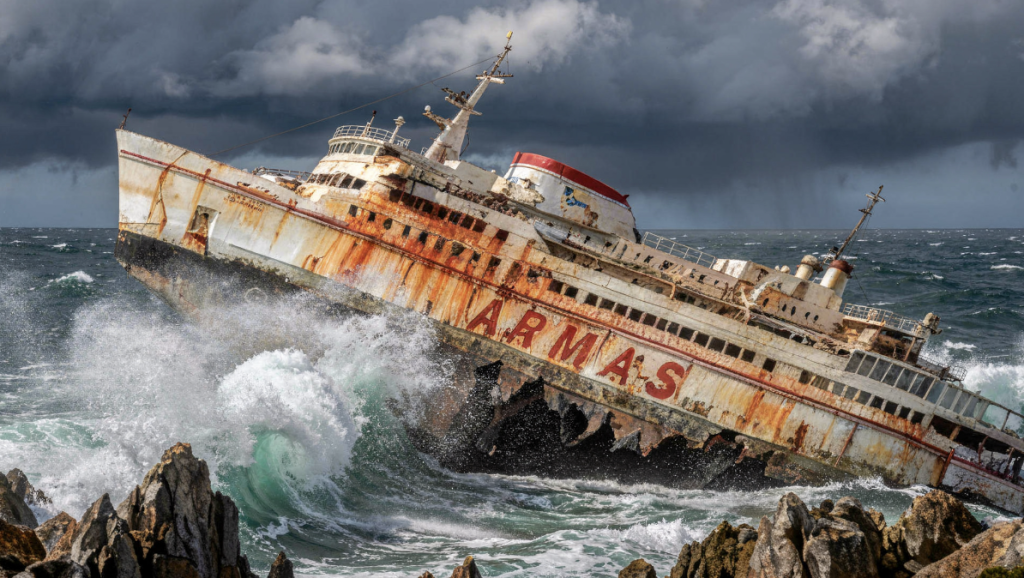
For Mike and Jeff, two veteran urban explorers and wreck divers, the ship was the ultimate prize. They knew the rules: the wreck was strictly off-limits, deemed structurally unstable and highly dangerous. But the temptation of untouched decay was too strong. On a bleak, overcast Tuesday, they killed the motor of their small rigid-inflatable boat and let the current drift them toward the towering wall of steel.
There was no turning back.
Crossing the Threshold
Jeff was the first to move. He clipped his gear, checked his mask, and pointed toward a warped gap in the upper deck that had dipped close enough to the waterline to serve as an entryway. Mike hesitated. The ship didn’t just look abandoned; it looked predatory. The metal groaned under the stress of the waves, a deep, resonant sound that vibrated right through the soles of their boots.
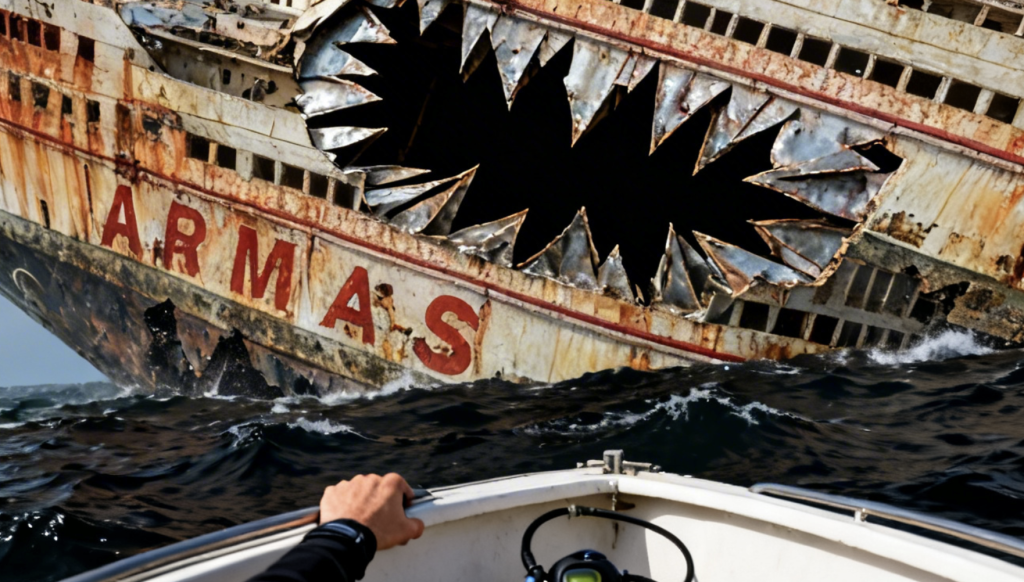
They tied their boat to a submerged railing, the nylon line pulling taut as the small craft bobbed in the chop. Taking a deep breath, they climbed through the jagged, torn frame of the doorway.
The moment they crossed the threshold, the atmosphere violently shifted. It wasn’t the fresh, biting cold of the open ocean. It was a stagnant, suffocating, dead cold. Their heavy flashlights sliced through thick dust—dust that made absolutely no sense inside a sealed, waterlogged ship. The air smelled of salt, wet rot, and something distinctly metallic.
The Echoes of the Dead
As their boots crunched over shattered safety glass, Mike swept his beam across the walls. Strips of expensive wallpaper hung like flayed skin. They moved deeper into the belly of the beast, entering what used to be the grand main hall. A sweeping, split staircase rose into absolute darkness, flanked by debris. Chairs were overturned, tables were splintered into kindling, and cobwebs stretched between the brass railings.
But it was what lay on the floor that made Mike’s stomach drop.
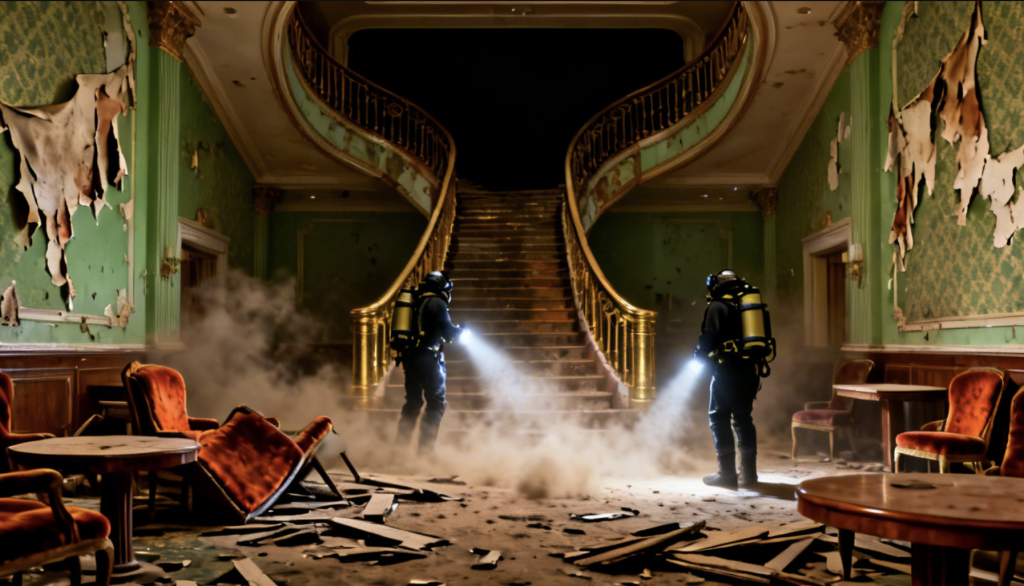
Cutting through the thick layer of undisturbed dust was a trail. It wasn’t a set of footprints. It was a pair of deep, parallel drag marks, as if something impossibly heavy—and entirely unresisting—had been pulled away from the grand hall and dragged into the claustrophobic side corridors. Jeff pointed his flashlight at the tracks, then looked back at Mike. The unspoken realization hung heavily between them.
They followed the trail. The corridor tightened. The ceiling dipped lower, and the air grew thick and foul.