
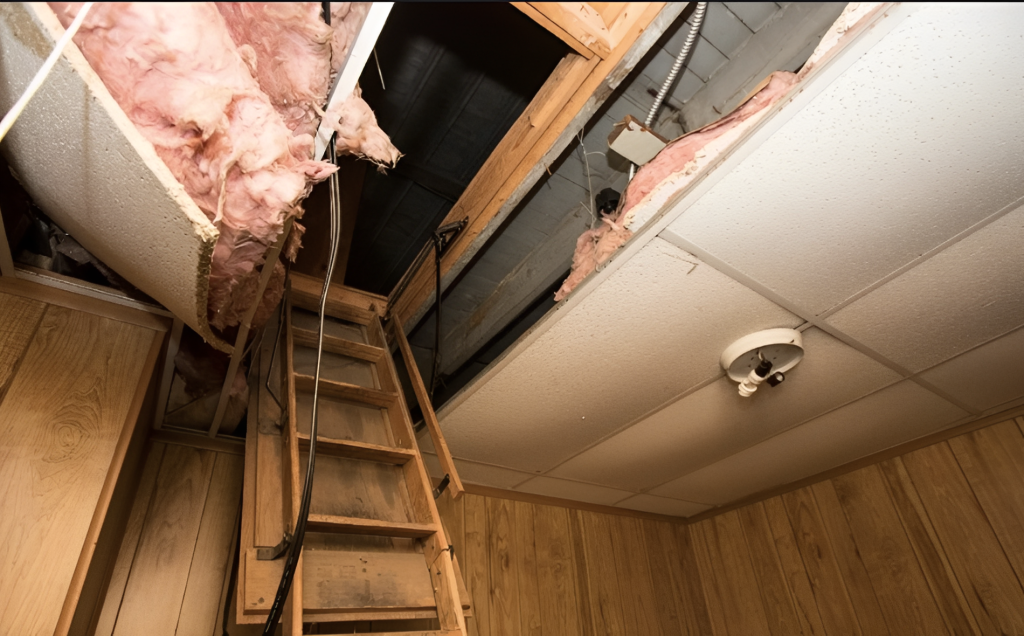
When a young couple purchased a modest 1940s fixer-upper in Ohio, they dreamed of fresh paint and modern fixtures. They never expected to unearth a fortune—or a dark secret that had been breathing behind the basement walls for nearly eighty years. What they found hidden in the “bones” of the house would change their lives, but it would also leave them looking over their shoulders.
The House with a Heavy Heart
Renovation is usually a story of progress, but for this Ohio family, it felt like unearthing a grave. The first and second floors were easy—sunny rooms and new carpet. But the basement was different. It was cold, damp, and felt “occupied” by a silence that wasn’t quite empty.
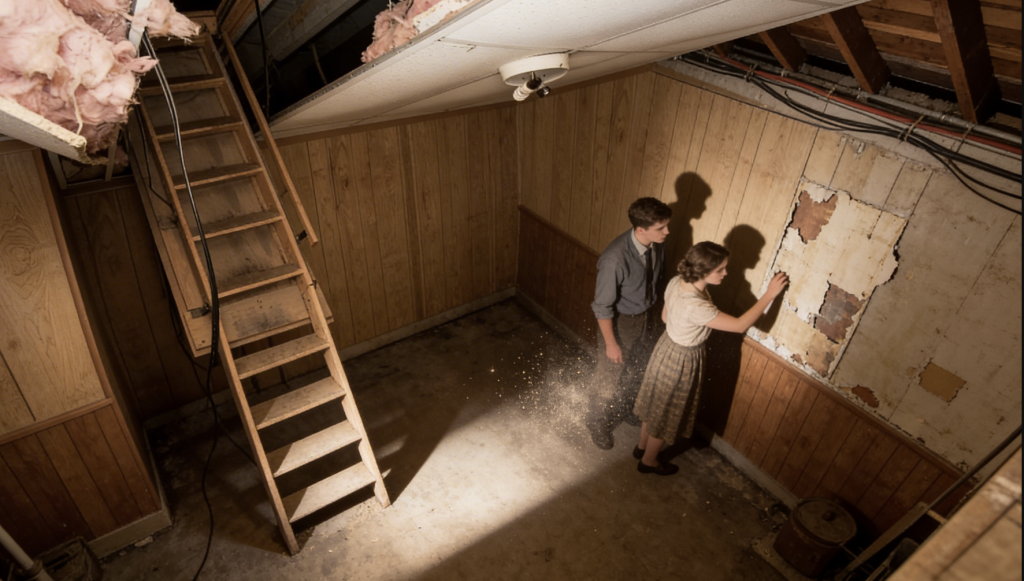
“There was a strange energy down there,” the husband recalled. As they began stripping away decades of rotting plywood and peeling wallpaper, they found the first sign that this house wasn’t normal. Hidden behind the panels were bizarre drawings—frantic graffiti and faces sketched directly onto the concrete. It looked like the work of someone who had spent a lot of time in the dark, waiting for something to happen.
The Strike of the Crowbar
The turning point came during the demolition of the basement ceiling. The husband was swinging a crowbar, pulling down old slats of wood to expose the floor joists of the kitchen above. Suddenly, the metal tool hit something that didn’t sound like wood or stone. It was a hollow, metallic thud.
Peering into the narrow gap between the subfloor and the ceiling rafters, he saw a grey-green shape wedged tightly into the corner. It was a vintage, hard-shell suitcase, caked in nearly a century of soot and cobwebs.
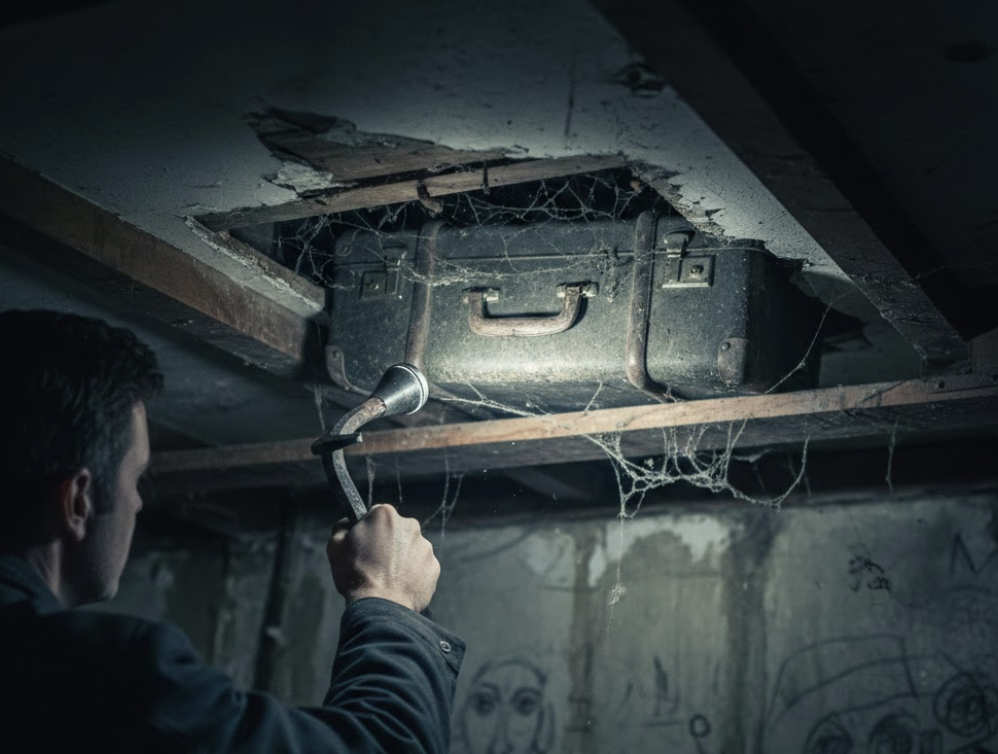
“It was jammed in there so perfectly,” he said. “Someone didn’t just hide it. They sealed it into the architecture of the home.”
The Weight of the Past
The suitcase was unnervingly heavy. It felt “dense”—not like it was full of clothes, but like it was packed with lead. The husband didn’t open it immediately. He felt a primal sense of caution. He waited for his wife to return home so they could face the mystery together.
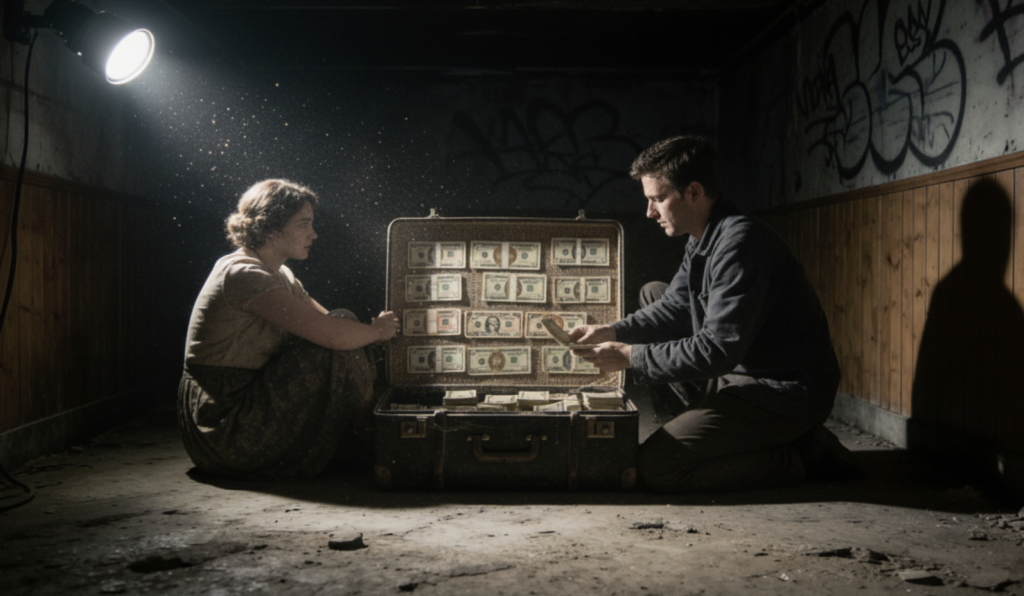
They sat on the dusty basement floor, a single work light casting long shadows against the graffiti-covered walls.
“Maybe it’s old photographs,” she whispered.
“Or maybe it’s something we aren’t supposed to see,” he replied.
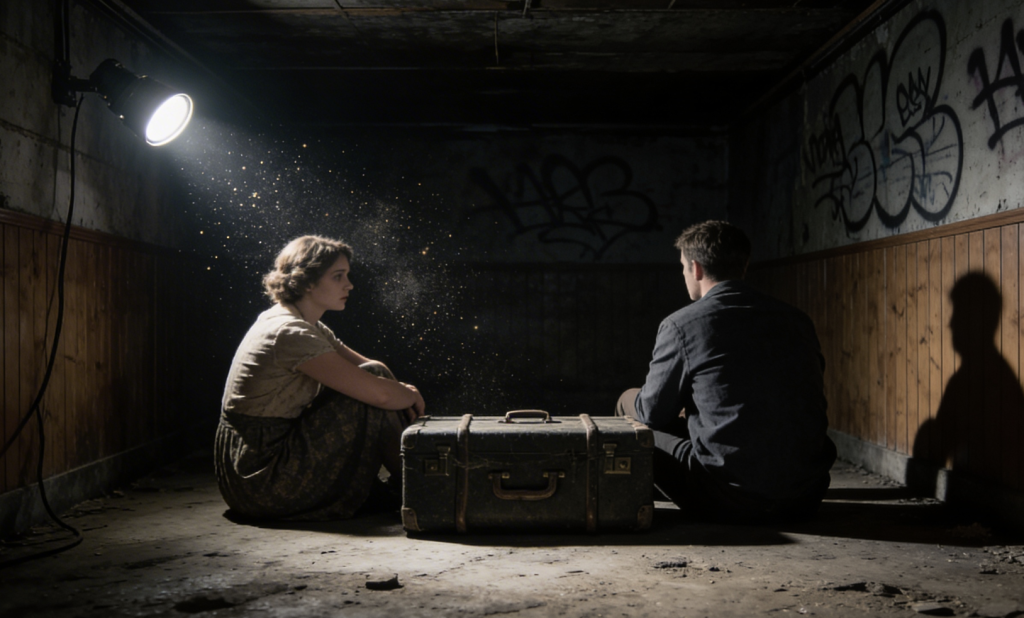
The locks were rusted shut, requiring a hammer and screwdriver to pry them open. With a sharp crack, the seal of 1951 was finally broken.
Wax Paper and the Smell of “Old Money”
Inside, there were no gold bars or sparkling diamonds. Instead, the couple found neat, rectangular bundles wrapped tightly in yellowed wax paper. The choice of packaging was deliberate; wax paper protects against the dampness of an underground basement. Whoever put this here intended for it to survive for a very long time.
The husband peeled back the first layer of paper. His breath hitched. Beneath the wax was a stack of twenty-dollar bills. But these weren’t modern notes. They were “Small Size” notes from the 1920s and 30s, featuring the iconic “brown seals” and “gold certificates” of a bygone era.
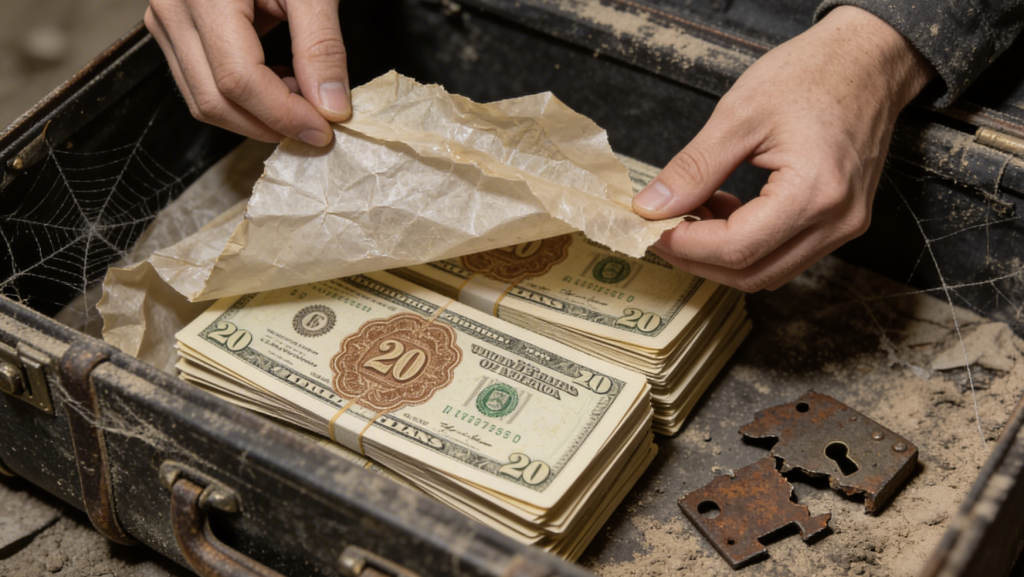
“It’s twenties,” he gasped. “The whole stack is twenties.”
Then came the second bundle: fifties. The third: hundreds. The dates on the bills—1928, 1934, and 1950—told a story of a fortune gathered during the height of the Great Depression and the chaos of the post-war boom.
A Fortune in the Dust
As they laid the money out on the floor, the gravity of the find began to sink in. $5,000… $15,000… the total climbed toward $23,000. In 1951, that amount of money could have bought three houses in that very neighborhood. In today’s market, considering the inflation and the massive “collector’s premium” for uncirculated 1920s currency, the find was worth a life-changing sum.
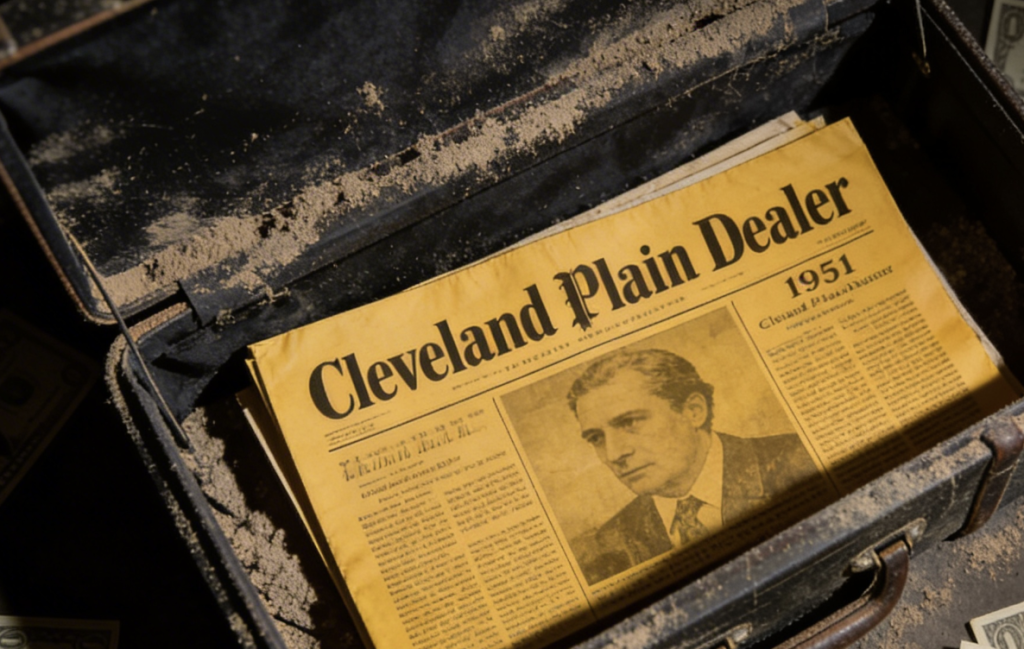
But at the bottom of the suitcase lay a chilling clue: a copy of the Cleveland Plain Dealer newspaper dated March 1951. It was the “timestamp” of the crime.
The Gangster Connection
Why would someone hide a king’s ransom in a ceiling and never return for it? The couple began digging into the home’s history. In the 1940s and 50s, Cleveland was a playground for organized crime and mob-run rackets. The house had previously belonged to a man who lived a quiet, unassuming life as a clerk—yet he always had the newest cars and no visible debt.
The money wasn’t sequential. It was “randomized” cash—the hallmark of a “slush fund” or a “getaway stash” used by those operating outside the law. It’s likely the owner died unexpectedly, taking the secret of the basement ceiling to his grave.
The FBI Steps In
The story took a sharp turn when the couple shared their discovery online. Within days, the authorities were notified. Because the sum was so large and the currency dated back to an era of high-profile bank robberies and kidnappings (which have no statute of limitations), the FBI launched an inquiry.
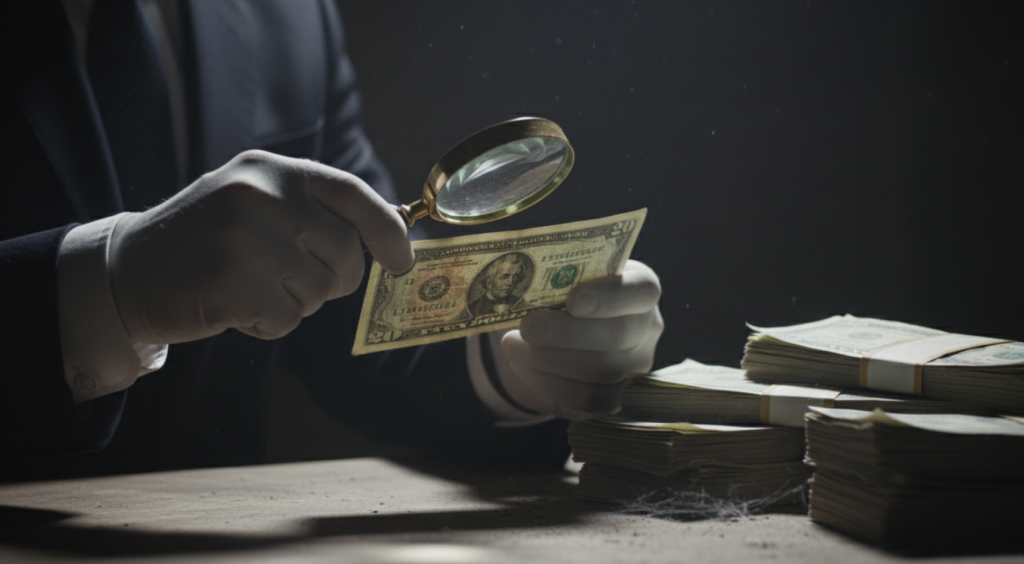
Federal agents scrutinized the serial numbers, cross-referencing them with “hot lists” from the Depression era. For weeks, the couple lived in limbo, fearing the money would be seized as evidence of a century-old crime.
The Aftermath: A Gift or a Curse?
After an agonizing investigation, the FBI delivered their verdict: while the money was suspicious, it couldn’t be definitively linked to a specific unresolved federal crime. Under “treasure trove” laws, the couple was allowed to keep the find.
They sold the rare notes to collectors, netting significantly more than the face value of the cash. They paid off their mortgage and finished the renovation.

But the house is different now. The husband admits that while the money solved their financial problems, it didn’t bring peace. “We painted over the drawings on the walls,” he said, “but we still hear the house ‘settling’ at night. We always wonder… if that was in the ceiling, what’s under the concrete floor we haven’t broken yet?”