
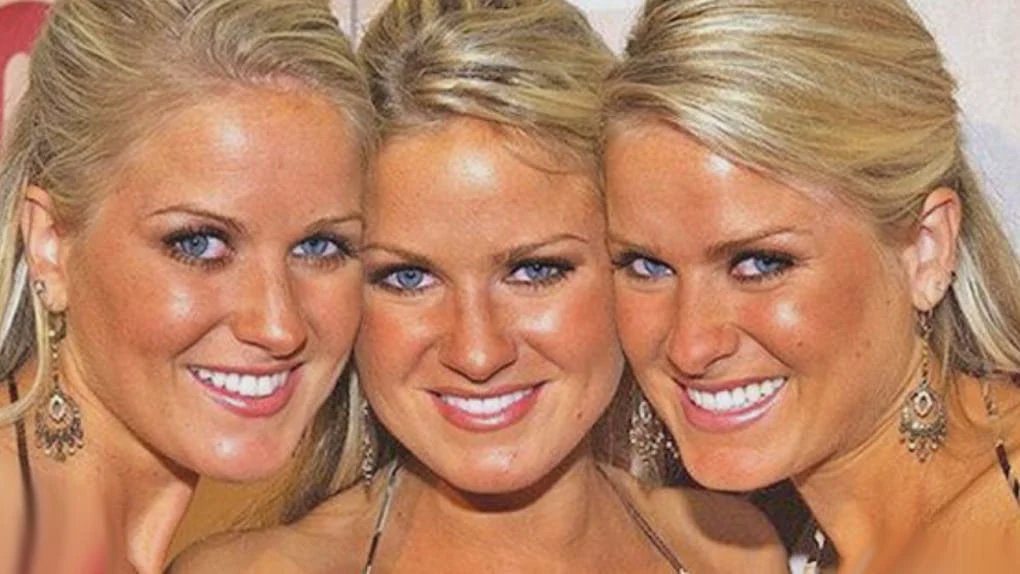
When Nicole, Erica, and Jaclyn Dahm stood under the glaring studio lights of the hit daytime TV show The Doctors in March 2017, they thought they knew exactly what was inside the sealed envelopes they were holding. They were identical triplets. They shared the same dazzling smile, the same piercing blue eyes, the same flowing blonde hair, and—presumably—the exact same genetic blueprint.
But as they opened the results of their at-home DNA ancestry tests, a heavy, stunned silence fell over the studio audience. The women, who had spent their entire lives sharing a single, collective identity, suddenly realized that everything they believed about their biological reality was an illusion.
To understand why this televised moment shook them to their absolute core, you have to rewind to the very beginning. You have to understand what it is like to grow up in a world where the word “I” doesn’t exist, and everything is permanently trapped in “We.”

The Tattoos That Branded Their Childhood
On December 12, 1977, in the tiny, freezing-cold town of Jordan, Minnesota, a local family welcomed a miracle: three perfectly healthy, identically beautiful baby girls. Their parents were absolutely thrilled, but that joy was quickly followed by a very practical panic. The newborns were so remarkably identical that it was physically impossible to tell them apart. There were no birthmarks, no different hair textures, and no varying weights to rely on.
Desperate to avoid feeding the same baby twice or mixing up their medical records, the parents resorted to a permanent, somewhat shocking solution. They had tiny, permanent ink dots tattooed onto the infants’ bottoms.
Nicole, the firstborn, received a single dot. Erica, the middle child, received two dots. Jaclyn, the youngest, was left without a mark. These tiny medical tattoos became their very first identity cards in a world that would soon refuse to see them as individuals.

Growing Up as a Local Spectacle
In a close-knit agricultural community of fewer than 30,000 people, the Dahm triplets were nothing short of local celebrities. Wherever the family went, heads turned. Strangers would stop and stare, fascinated by the uncanny mirroring of the three little girls. But behind the polite smiles and the matching dresses lay a deep, brewing psychological struggle.
In many cases involving twins or triplets, the siblings will intentionally seek out different hobbies, distinct clothing styles, or opposing friend groups just to carve out a unique sense of self. The Dahm sisters did the exact opposite. They were trapped in a beautiful, mirrored labyrinth. They wore the exact same clothes, hung out with the exact same friends, and even shared the exact same interests.
“We rarely held our own identity,” Nicole confessed years later in a candid interview. “We were always known as ‘You three’ or simply ‘The Triplets.’ We were a package deal.”
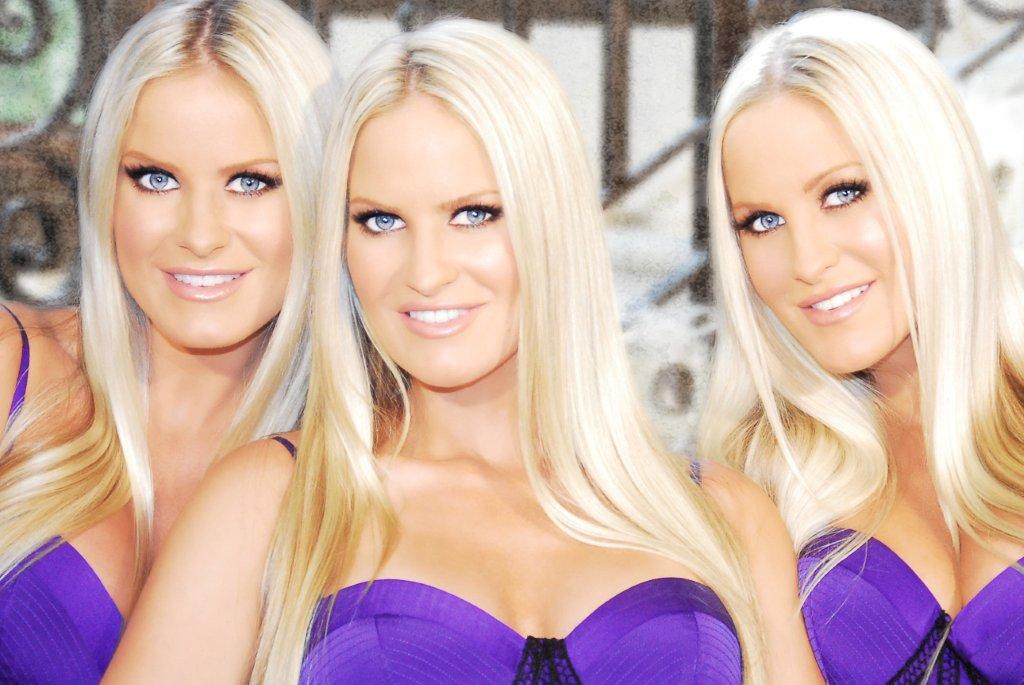
As they grew into teenagers, their striking, synchronized beauty caught the attention of major modeling agencies. At just 16 years old, the girls graced the cover of Teen Magazine after winning the Great Model Search. Staring out from the magazine racks with their signature blue eyes, they were a nationwide sensation. Yet, despite the glamorous taste of the modeling world, they decided to turn their backs on it. They had a different, shared dream.
The Campus Flyer That Changed History
Determined to live a normal, impactful life, all three sisters enrolled in the University of Minnesota’s nursing program. Their ultimate fantasy wasn’t walking the runways of Paris; it was working the same shifts, at the same hospital, as registered nurses.
But destiny has a funny way of intervening. One afternoon, while walking across the sprawling university campus, the girls spotted a flyer pinned to a bulletin board. It was a casting call for Playboy magazine’s upcoming “Girls of the Big Ten” special edition.
It started as a joke. Why not go to the audition just to see what happens? But the moment the Playboy casting agent laid eyes on Jaclyn, Erica, and Nicole, the joke ended. The agent immediately recognized that these gorgeous, identical triplets had a rare, undefinable spark. They were offered a test photoshoot on the spot.
The decision was agonizing. They were conservative nursing students from a small Midwestern town. Stripping down for the most famous men’s magazine in the world was not part of the plan.
“We would never have done this as individuals,” Jaclyn admitted in a 1998 interview. But because they were doing it together, holding each other’s hands, the terrifying leap felt safe. After endless nights of deliberation, they signed the contracts, becoming the first-ever triplets to be featured as a centerfold in Playboy.
The Hollywood Hustle
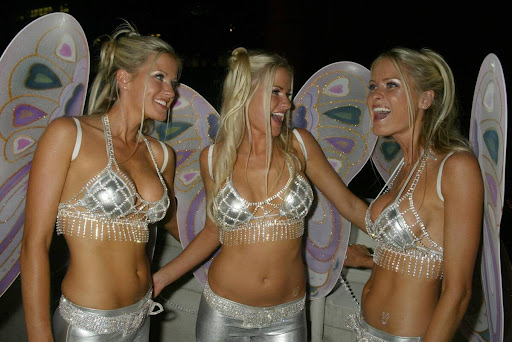
The 1998 centerfold exploded their quiet lives. Erica later noted that the magazine feature was “the beginning of the triplets’ new lives.” Realizing they had struck pop-culture gold, the sisters dropped out of college, packed their bags, and moved to Los Angeles.
Unlike thousands of aspiring actors who face brutal rejection in LA, the Dahm triplets were a sheer force of nature. Hollywood didn’t know what to do with them, except to put them on screen as quickly as possible. They landed memorable guest roles on hit television shows, most notably playing the three breathtakingly beautiful women living in the dorm room next to Eric and Jack on the beloved sitcom Boy Meets World. They even appeared on Family Feud with their father and older sister, easily walking away with the $10,000 prize.
They were wealthy, famous, and adored. But they were still typecast. They were still “The Triplets.”
The Ultimate Test on Live Television
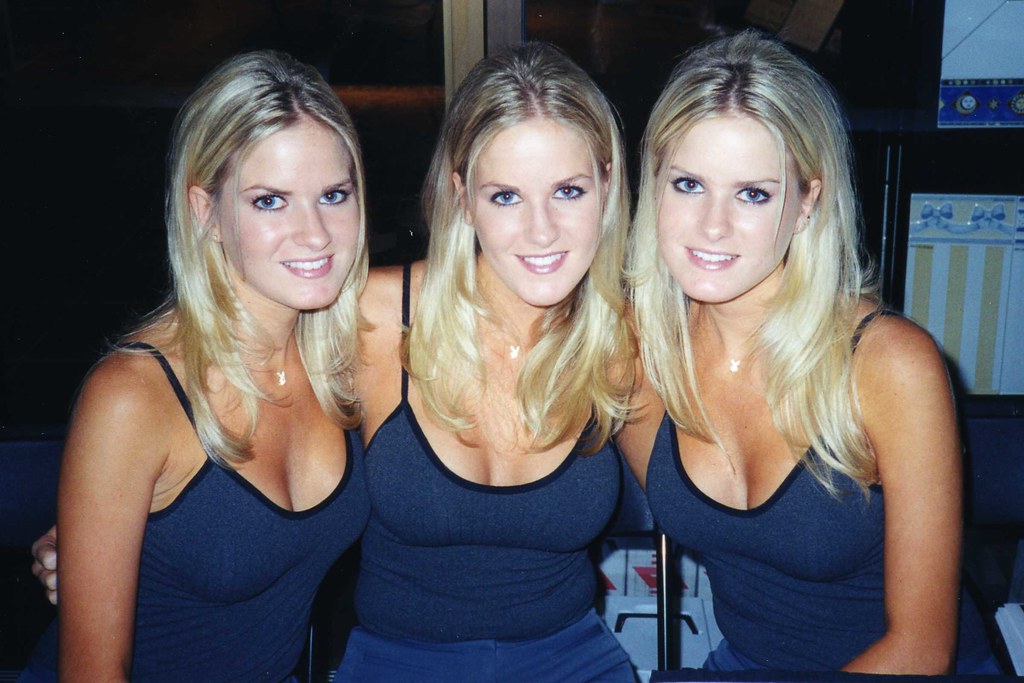
Fast forward to March 2017. The sisters, now approaching their 40s, were invited to appear on the hit medical talk show The Doctors. The producers had an intriguing pitch: they wanted the identical triplets to take an at-home genetic test (specifically from the company 23andMe/Ancestry) to test the accuracy of these booming commercial DNA kits.
The premise was simple. Because the Dahm sisters were identical—meaning they split from a single fertilized egg—their DNA should be a 100% exact match. The test results should be perfectly, flawlessly mirrored.
The sisters eagerly agreed, swabbing their cheeks and sending the vials off to the lab. They expected the live TV segment to be a lighthearted, mildly boring confirmation of what they already knew: they were clones.
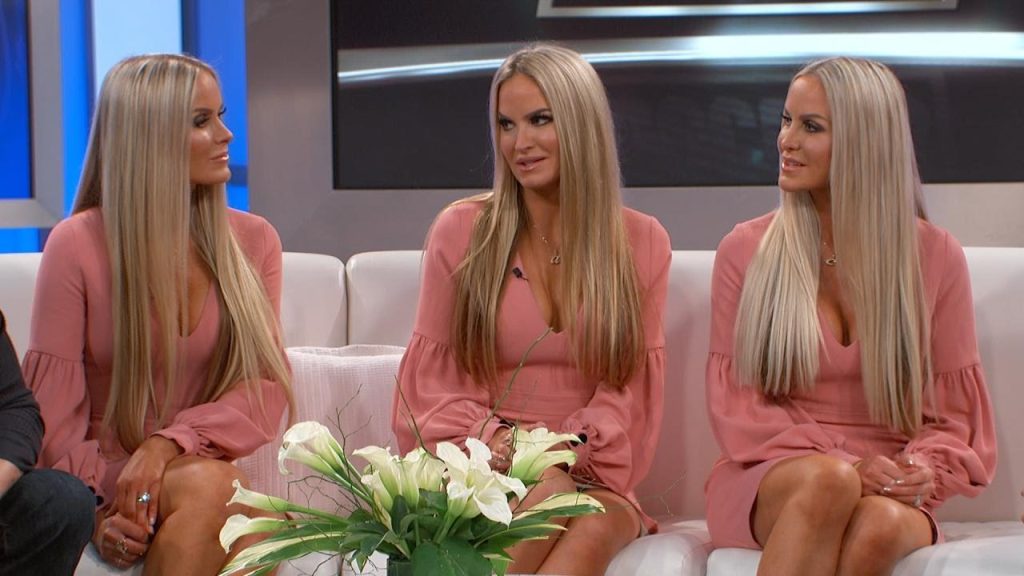
The Shocking Truth: End of the Clone Era
As the host read the results live on stage, the smiles vanished from the sisters’ faces, replaced by pure, unadulterated shock.
While the test confirmed they were indeed identical in their core genetic markers, their ancestry breakdowns were incredibly—and inexplicably—different. According to the data, Nicole’s ancestry was 18% Scandinavian, but Erica’s was only 16%. One sister showed a significant percentage of French and German heritage, while the other two showed completely different trace amounts of British and Irish blood. Furthermore, the test revealed differing genetic predispositions to specific health traits, environmental reactions, and metabolisms.
The studio audience gasped. How could three women who originated from the exact same egg have different ancestry and health profiles?

The medical experts on the show had to step in to explain the mind-bending science. They revealed that while identical twins and triplets start with the exact same genetic code, their DNA doesn’t stay identical forever. Through a process called epigenetics, a person’s lifestyle, diet, environment, and even random microscopic cell mutations over the years cause certain genes to turn on and off. Furthermore, commercial DNA algorithms process slight variations differently.
Over 40 years of living, breathing, and experiencing the world, the Dahm triplets had quite literally mutated away from each other.
As the science washed over them, a deep, emotional realization hit the sisters. There were tears in their eyes, but they weren’t tears of fear—they were tears of profound liberation. For the very first time in their lives, they had cold, hard, scientific proof that they were not just carbon copies of one another.
The single dot, the double dots, and the blank skin were no longer needed. The DNA test didn’t break their incredible sisterly bond; it elevated it. It finally gave them the one thing they had been searching for since they were little girls in Minnesota: the undeniable, biological right to just be themselves.
