
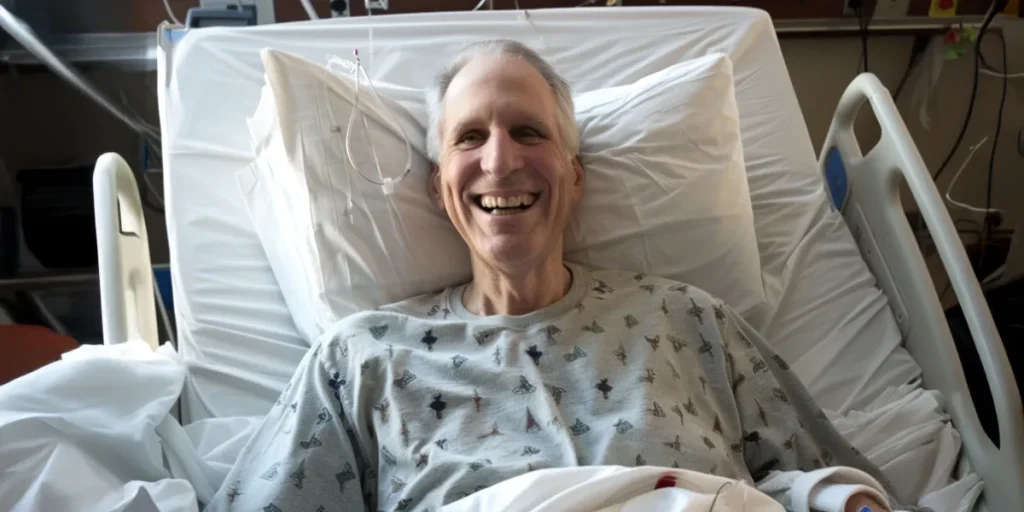
It was a quiet, uneventful night at Memorial Medical. The usual stillness settled over the ward, broken only by the soft hum of machines. But in Room 304, something unusual began to stir. A monitor blinked erratically—first a faint chirp, then another, sharper sound. The night nurse, startled, rushed to Dr. Smith ’s side. Patient 4211 had moved.
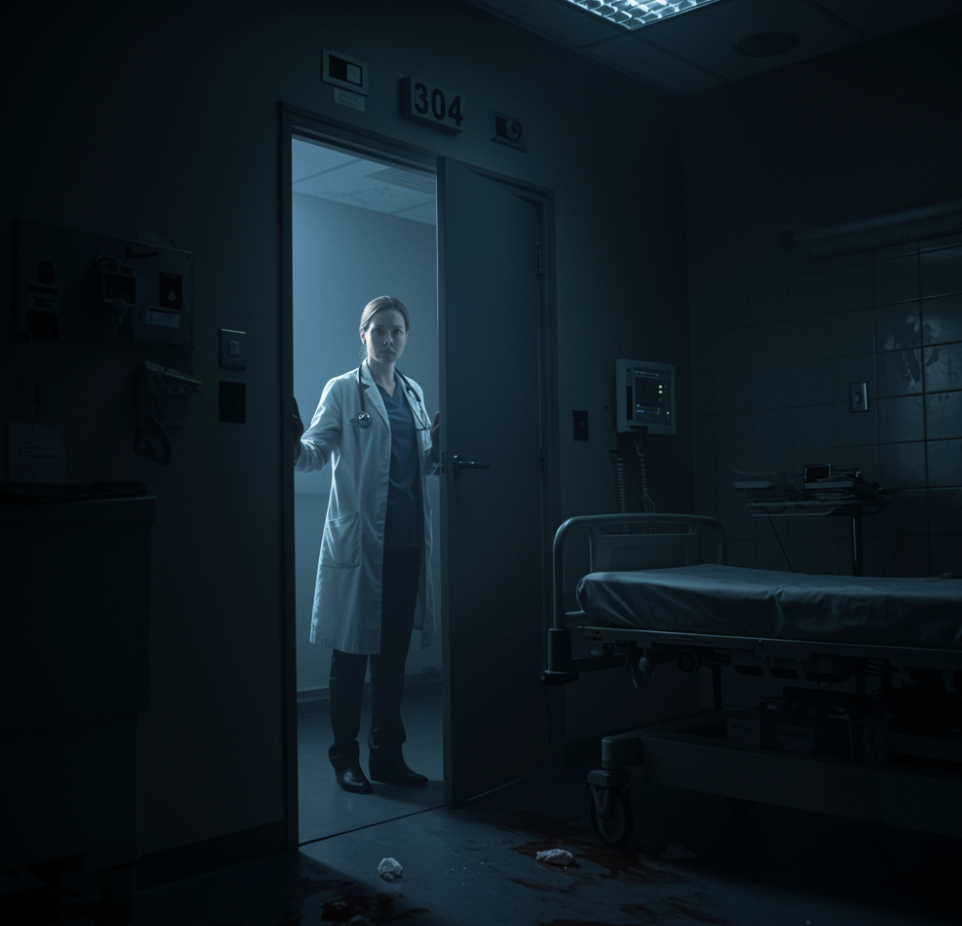
For the past seventeen years, this patient had lain in a coma, his condition unchanged. But now, the impossible was happening. Dr. Smith’s heart raced as the monitor’s flatline shifted, replaced by a weak, irregular pulse. She rushed into the room, his lab coat half-buttoned, every instinct telling her something monumental was occurring.
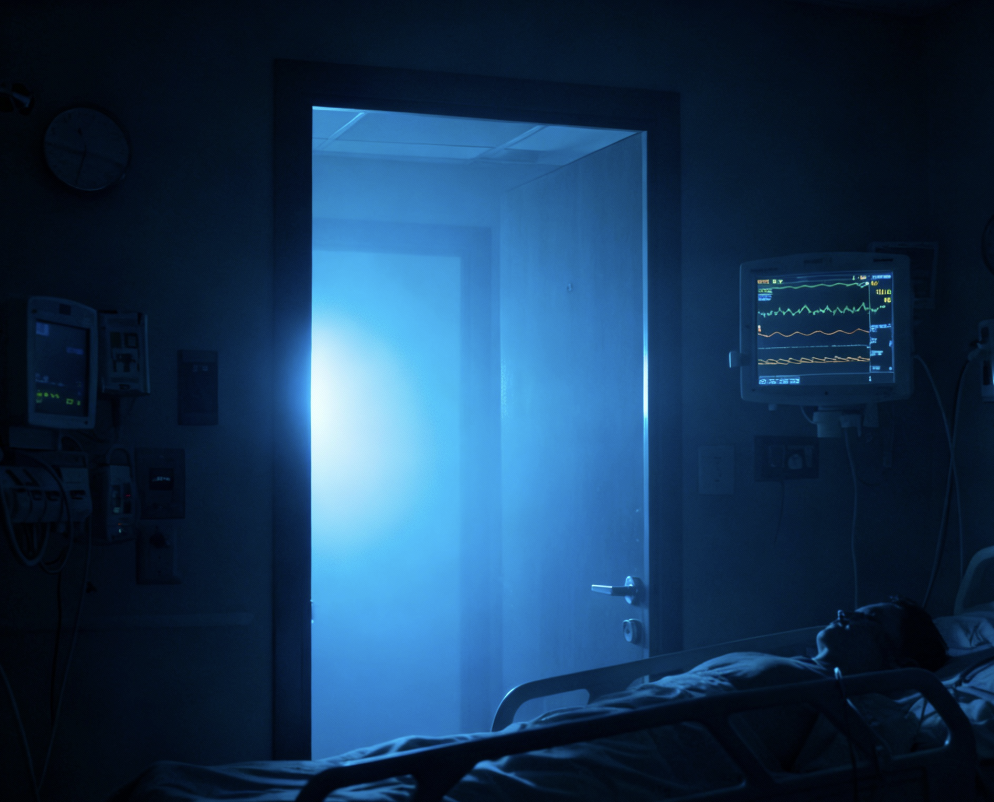
The man’s fingers twitched, brushing against the sheets as if he were remembering the sensation of touch after years of silence. His breathing, shallow and strained, filled the room with an unfamiliar sound—a noise that hadn’t been heard for nearly two decades.
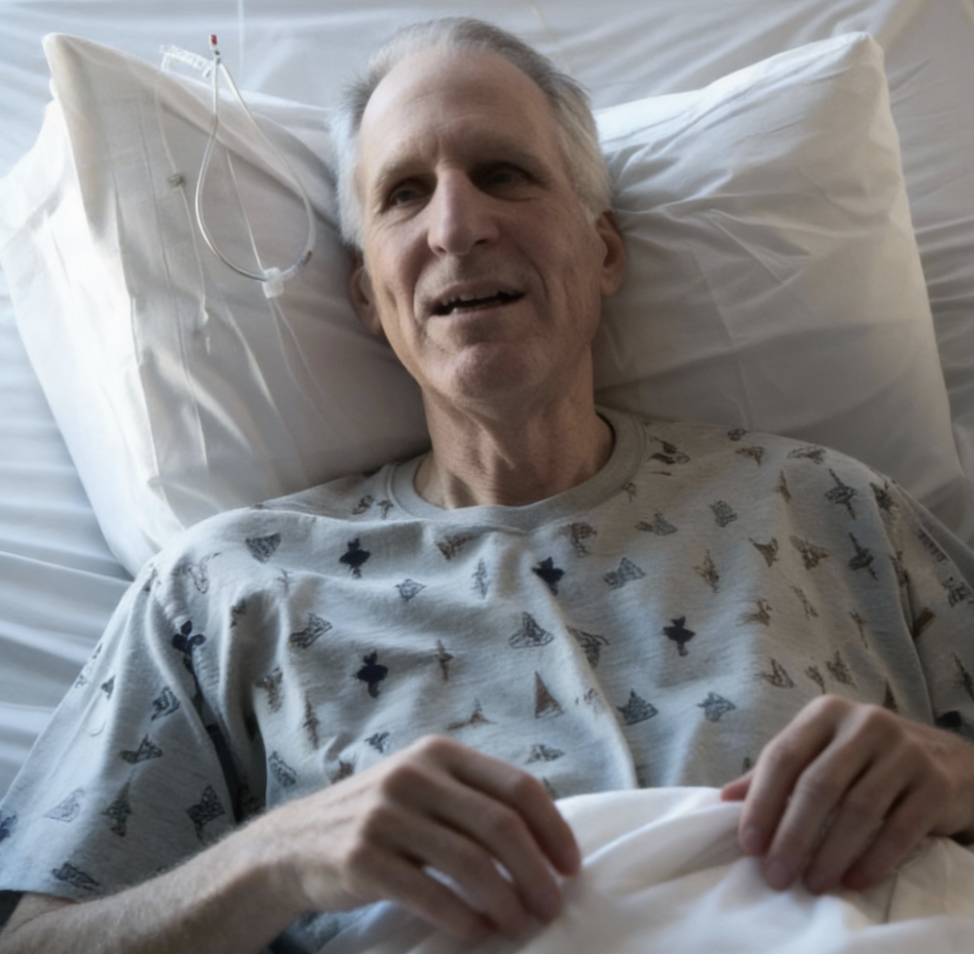
Dr. Smith leaned closer. The man’s eyes fluttered open, revealing a clouded, but startlingly aware gaze. The harsh fluorescent lights reflected off his dilated pupils like shards of glass. He seemed to be trying to speak, his lips moving with difficulty, but only a faint rasp escaped. “Warn…lin…” he croaked, his voice a dry whisper. He tried again, but the words remained tangled in his throat.

“Can you hear me?” Dr. Smith asked gently, leaning in to hear him better. His lips moved once more, and this time, the words sounded like, “Ma…rr…in…evacuate.”
Dr. Smith froze, her pulse quickening. “You’re safe,” he reassured him, his voice steady but her thoughts racing. His eyes darted to the ceiling, unfocused yet searching, as if he were seeing something only he could understand. He breathed sharply, as though bracing for something no one else could perceive.
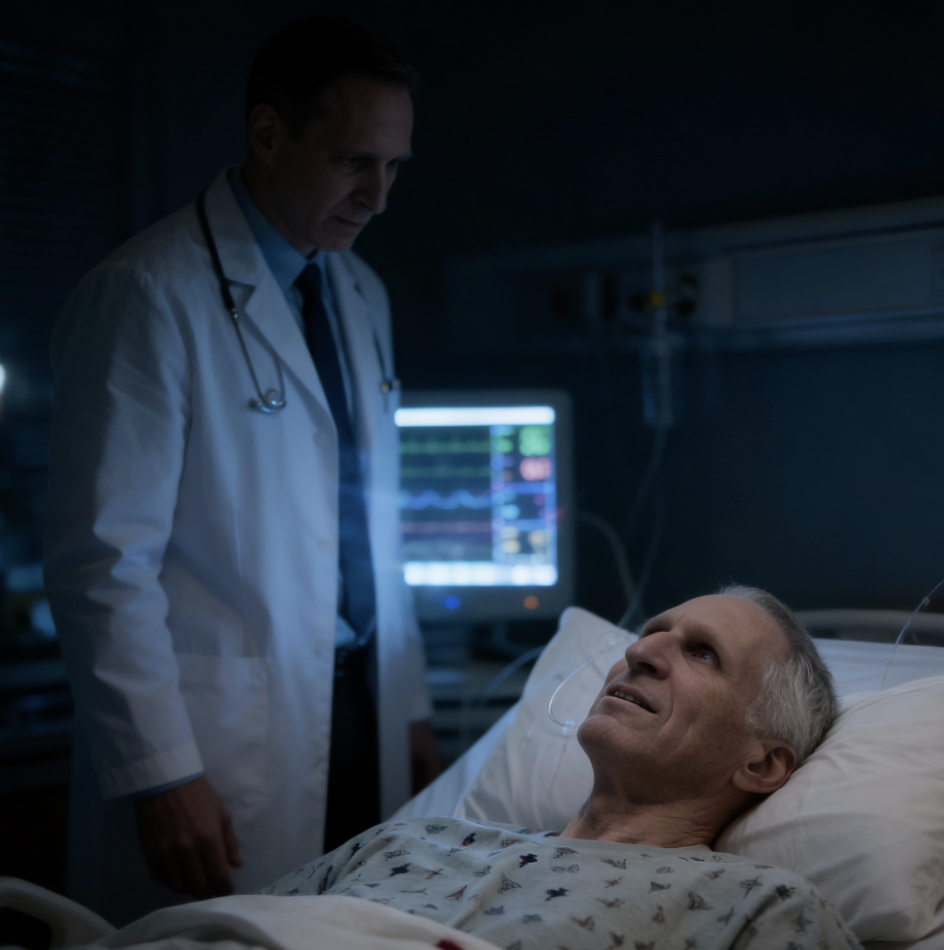
“Easy,” Dr. Smith murmured, trying to keep the situation under control. But the words felt hollow in his own ears, as if they meant little to him. He continued to murmur, the syllables straining to break free but always dissolving before any clarity could take hold.

Days passed, and Dr. Smith found herself piecing together the fragments of his speech. Words like “pressure,” “vent,” and “collapse” seemed to rise repeatedly, each time accompanied by a distant tremor in his body. Despite his physical frailty, it was clear he was trying to communicate something urgent, something buried beneath the years of silence.
One night, in the midst of his observation, Dr. Smith had a breakthrough. The man woke with surprising clarity and weakly grasped his wrist. “Report… warning… dangerous,” he whispered, his voice breaking apart before he could finish. “Under… the cliff.” His eyes flashed with recognition, but as always, the rest of his message evaporated before it could be fully understood.

Determined to unravel the mystery, Dr. Smith dug deeper. He scoured the man’s medical records, searching for any clue about his identity. The file was sparse—only the number 4211 and a note stating he had been found near the Old Coast Highway in 2008. A presumed victim of a coastal storm.

But then something caught his attention: the name “Marlin Ridge.” The man’s first words had sounded like “Marlin.” Could it be a coincidence?
A surge of realization hit him. He cross-referenced the name with local rescue records, and after hours of digging, he found it. Caleb Ward, a geologist, had gone missing in 2008 while researching a geothermal anomaly beneath Marlin Ridge. His project was considered highly risky, with the potential to destabilize the coastline.
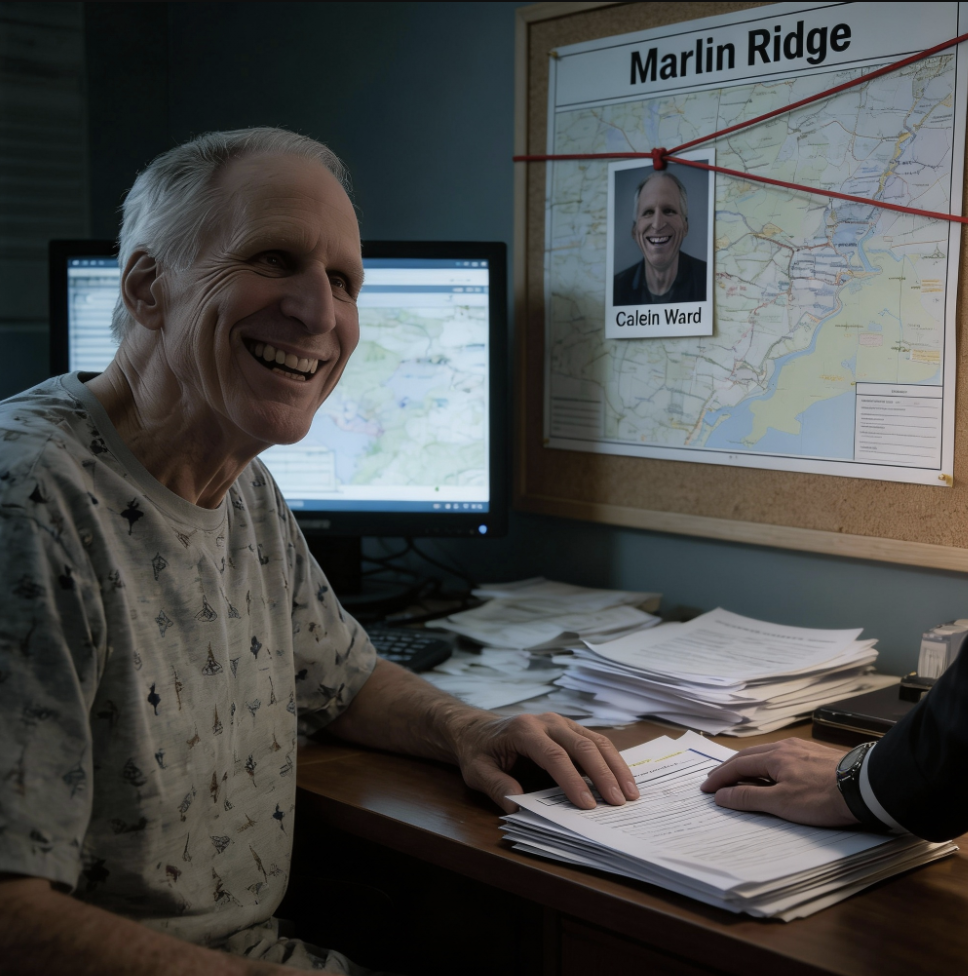
The pieces clicked together. This man, this patient, was Caleb Ward—the scientist presumed dead, his disappearance marked by the very same geological terms now surfacing in his broken speech.
Her heart raced as she connected with a local detective who had worked on the case years ago. The detective’s voice shook when she mentioned the name “Caleb Ward.” There had been no body found, only scattered equipment. The detective agreed to follow up on the lead, but it was clear—this was a discovery that could change everything.
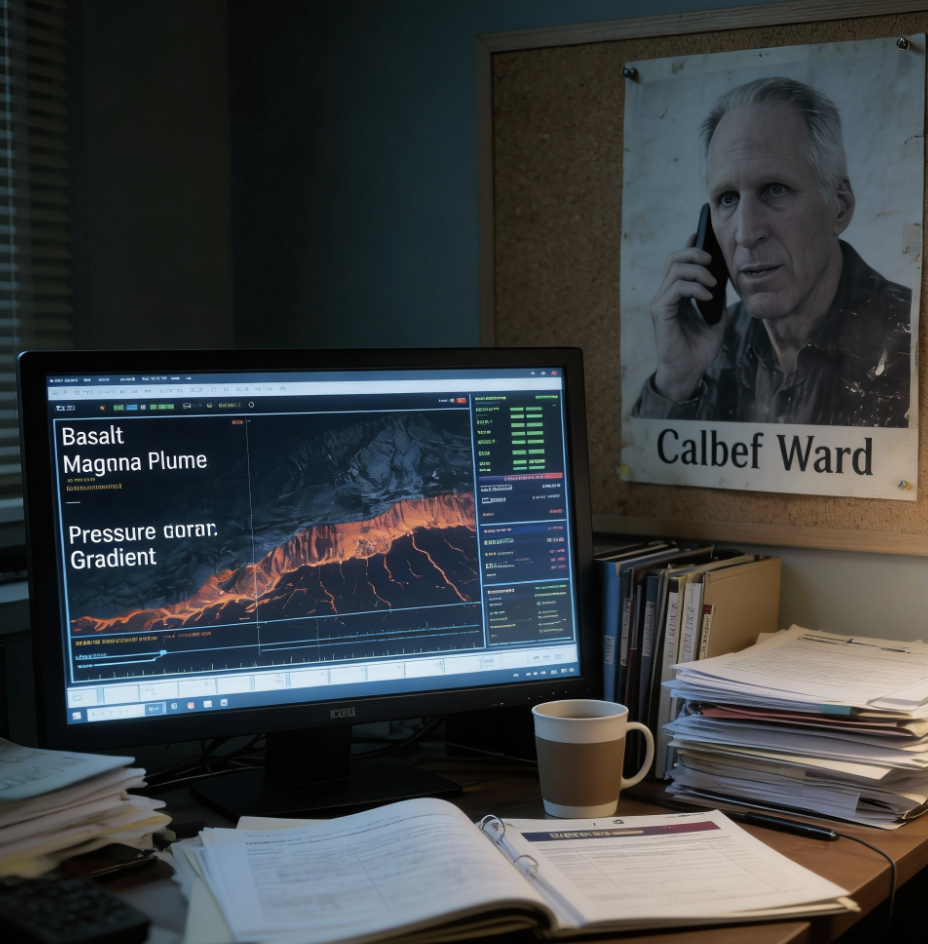
Helen’s obsession with the patient’s fragmented speech grew. She fed his recordings into a linguistic tool designed for neuro-rehabilitation. What she uncovered stunned her: his words weren’t random—they were filled with geological terminology. Terms like “basalt,” “magma plume,” and “pressure gradient” emerged again and again.
This wasn’t the rambling of a man lost in a coma. It was knowledge—knowledge that had been preserved in his mind, even after years of inactivity. It was as if he had been trying to warn them all along.
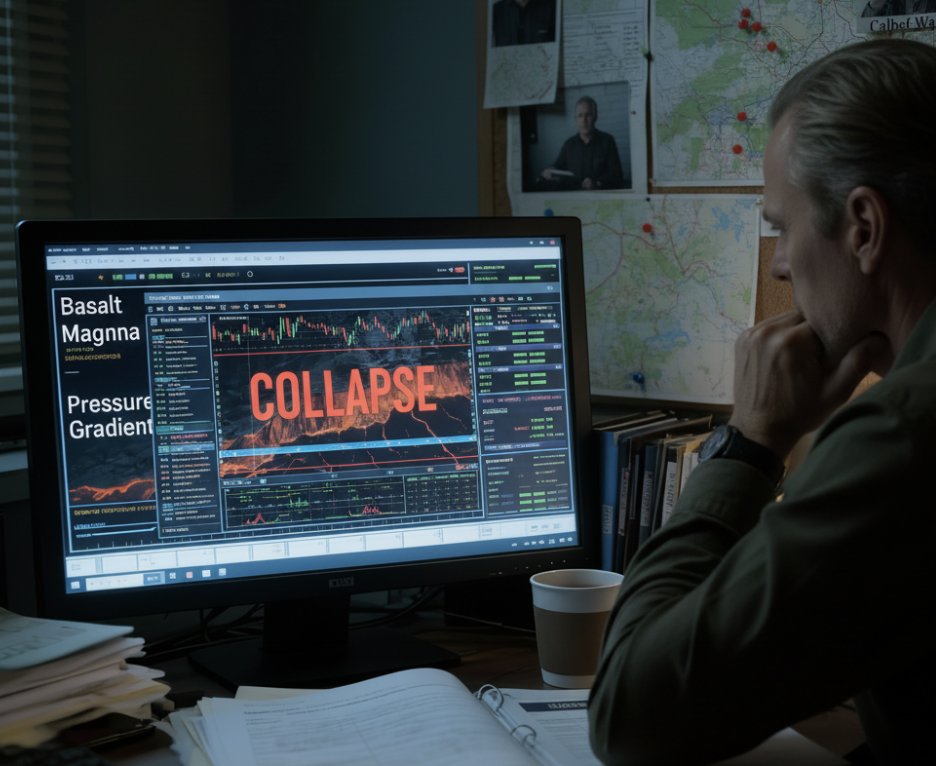
One evening, after sending the data to a contact in the university’s Earth Science department, she received an urgent response. The terms matched Caleb Ward’s research on geothermal risks beneath Marlin Ridge. He had been investigating the potential collapse of the area, something he believed could trigger catastrophic events.
Dr. Smith’s hands trembled as he reread the message. The patient in Room 304 wasn’t just any coma survivor. He was Caleb Ward, a man whose research had predicted the very disaster his subconscious was now trying to prevent.
The following night, as Helen sat by his bedside, a new realization gripped her. Caleb Ward wasn’t just trying to wake up. He was trying to warn the world of a disaster waiting to unfold. The tremors in his voice, the fractured sentences, the urgency in his words—it all pointed to one thing: the collapse of Marlin Ridge was imminent.
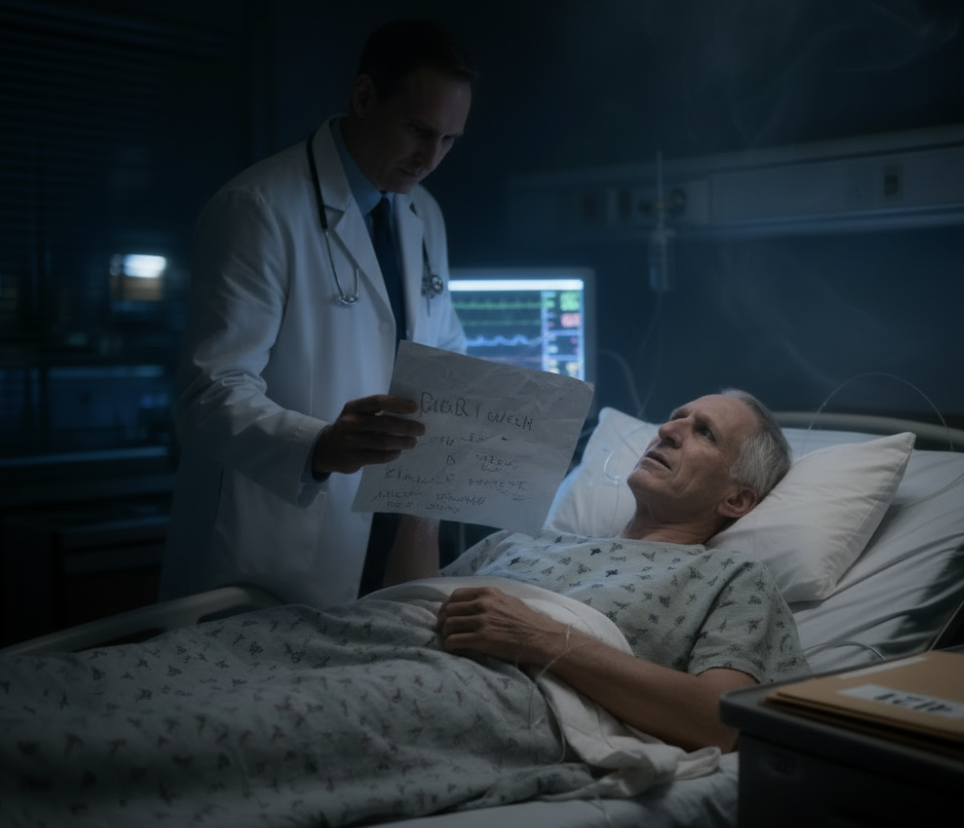
Dr. Smith knew he had to act fast. He contacted the authorities, the geological experts, anyone who could help. The truth that Caleb had carried with him through his coma was a warning—a dire one.
And as the night wore on, the pieces fell into place. The earth beneath Marlin Ridge was shifting. Caleb’s warnings were more than just words—they were prophecies, buried beneath years of silence, now echoing through the fragile edges of a man’s memory.
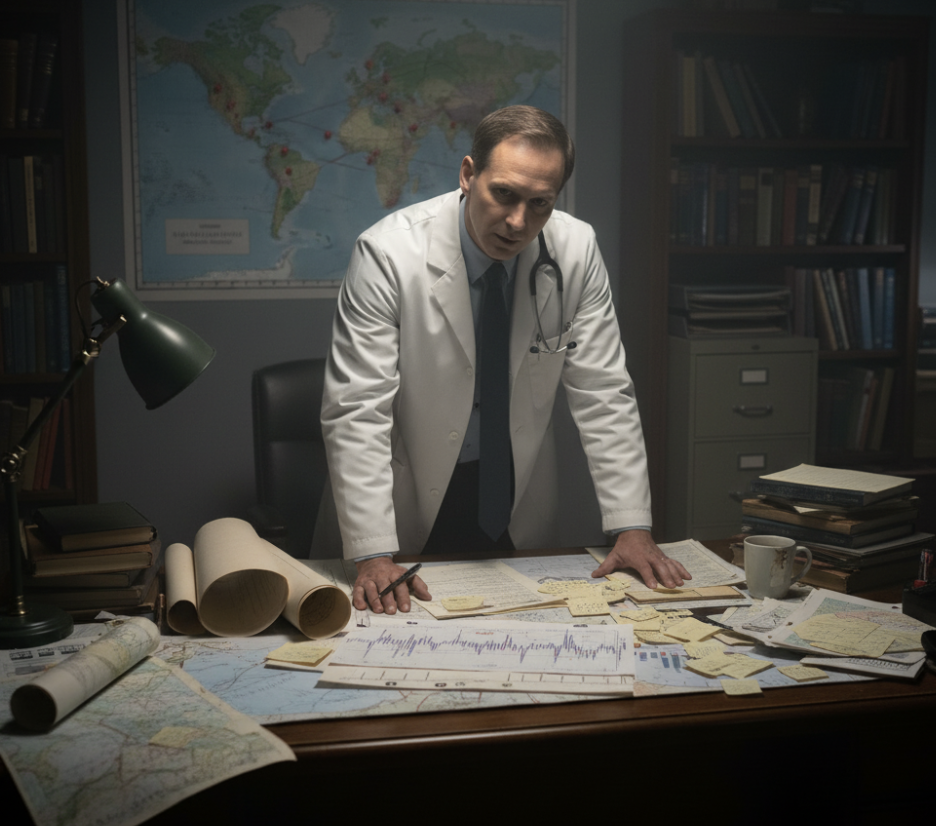
The collapse was coming.
And it would be up to Caleb Ward, the scientist who had never truly left, to save them all.