
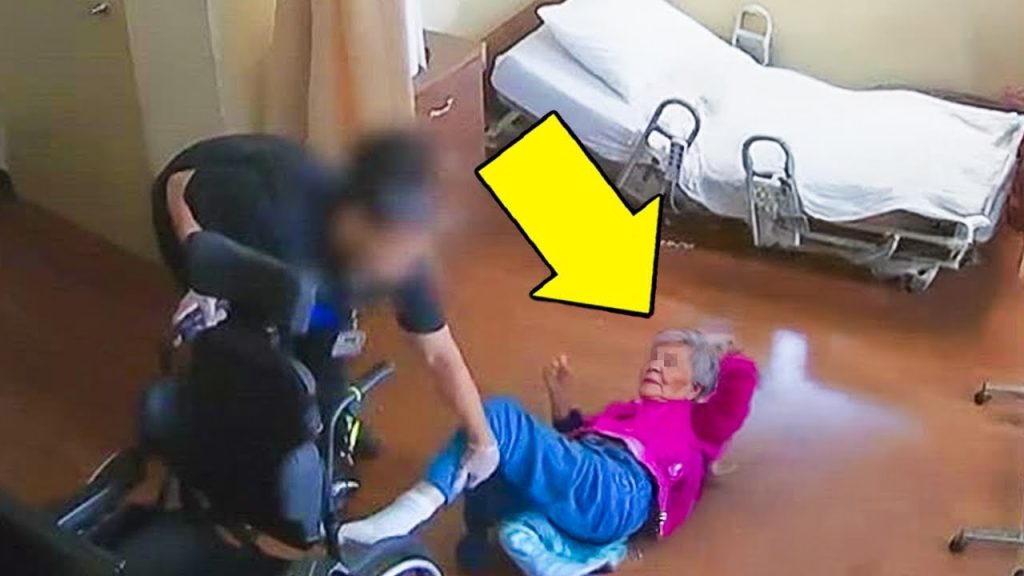
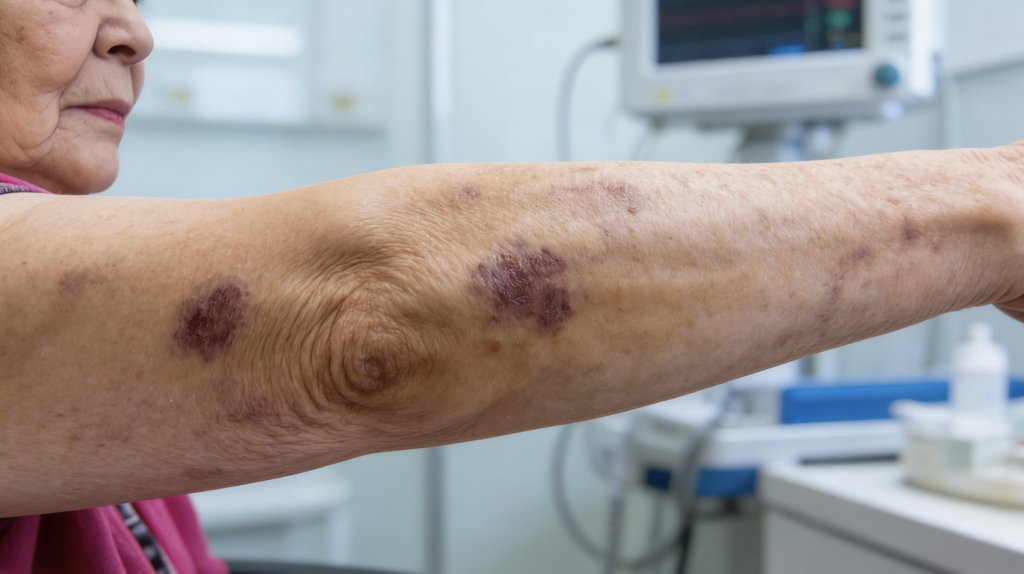
It started with the bruises—deep, purple welts blooming across my mother’s arms that seemed to appear overnight. My mom, Katie, had been confined to a wheelchair for years, and while she was frail physically, her mind had always been sharp.
Yet, every time I visited, there was a new injury: a scrape on her cheek, a nasty bruise on her wrist, or a cut on her leg. When I pressed her for answers, she would refuse to make eye contact, insisting, “I’m just clumsy, Michael. I just slipped.”
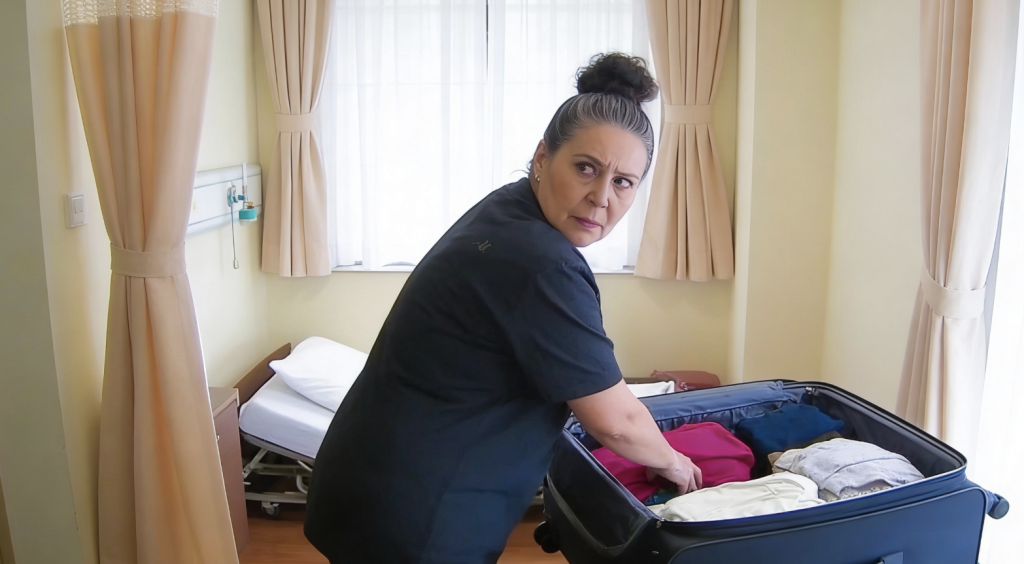
My wife, Loretta, and I didn’t buy it for a second, but we couldn’t be there 24/7. To ensure she was safe, we hired professional help. Enter Nicole. She seemed like an angel sent from heaven; her resume was spotless, her references were glowing, and she treated Mom with a level of tenderness that finally put our minds at ease.
Mom even told us she loved having Nicole around, so for the first time in months, I slept soundly.

But the peace didn’t last. Two weeks later, I stopped by for a surprise visit and found Mom wearing a heavy long-sleeved sweater in the middle of a sweltering July afternoon. When I gently rolled the fabric back despite her protests, my stomach dropped—there were fresh bruises, worse than ever before.
Nicole was in the kitchen, casually humming a tune while chopping vegetables, completely unbothered. I realized then that the danger wasn’t outside; it was sitting at our dinner table.
The Undercover Operation
Loretta refused to sit back and watch. That night, she told me she was taking a week off work to move in with Mom, using the cover story that she just needed a break from the city. It was a brilliant plan: Loretta would play the role of the loving daughter-in-law bonding with family, but in reality, she was a spy in her own house.
For the first three days, Nicole was on her best behavior, cooking, cleaning, and reading to Mom, making Loretta wonder if we were just being paranoid.
Then came Thursday. Loretta was reading in the guest room when she heard the floorboards creak outside her door. Nicole was on the phone, her voice lowered to a sinister, urgent hiss.
Loretta pressed her ear against the cold wood of the door and froze when she heard Nicole say, “We can’t do it right now. The daughter-in-law is here. She’s watching everything.”
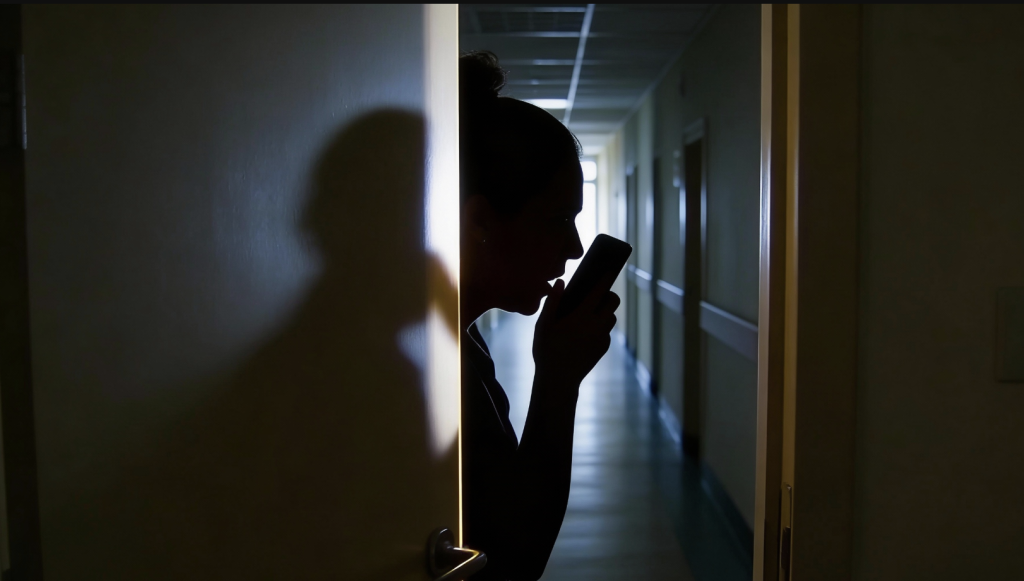
After a pause, Nicole added, “I know. We have to wait for the right moment. Just be patient.” Loretta’s heart hammered against her ribs as she texted me immediately: WE NEED CAMERAS. NOW. We weren’t dealing with clumsiness or simple negligence; we were dealing with a calculated conspiracy. But who was on the other end of that phone?
The Electronic Eye
I didn’t wait for permission. While Loretta took Nicole and Mom out for a “girls’ lunch” to get them out of the house, I slipped inside with a bag of equipment.
My hands trembled as I mounted tiny, high-definition lenses throughout the house: one in the living room tucked behind a row of books, one in the kitchen inside a smoke detector, and one in Mom’s bedroom. It felt like an invasion of privacy, but I knew it was the only way to save her.
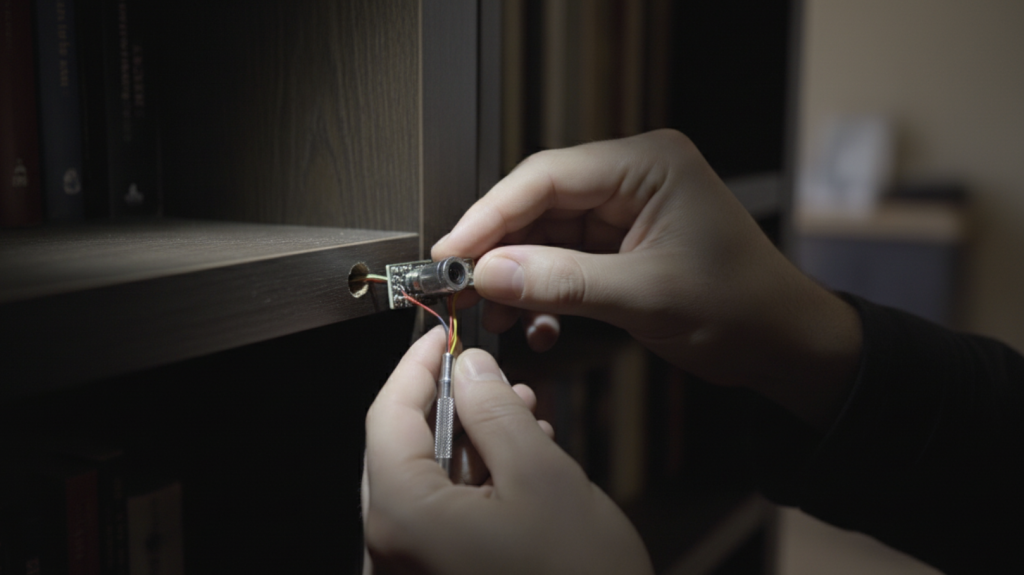
For two days, the feed showed nothing but mundane routine, and I started to doubt myself. Then, while I was at my office with the live feed open on my second monitor, I saw Nicole enter the living room where Mom was resting.
Mom asked for a glass of water, and on the screen, Nicole’s face changed instantly. The sweet smile vanished, replaced by a look of pure malice.
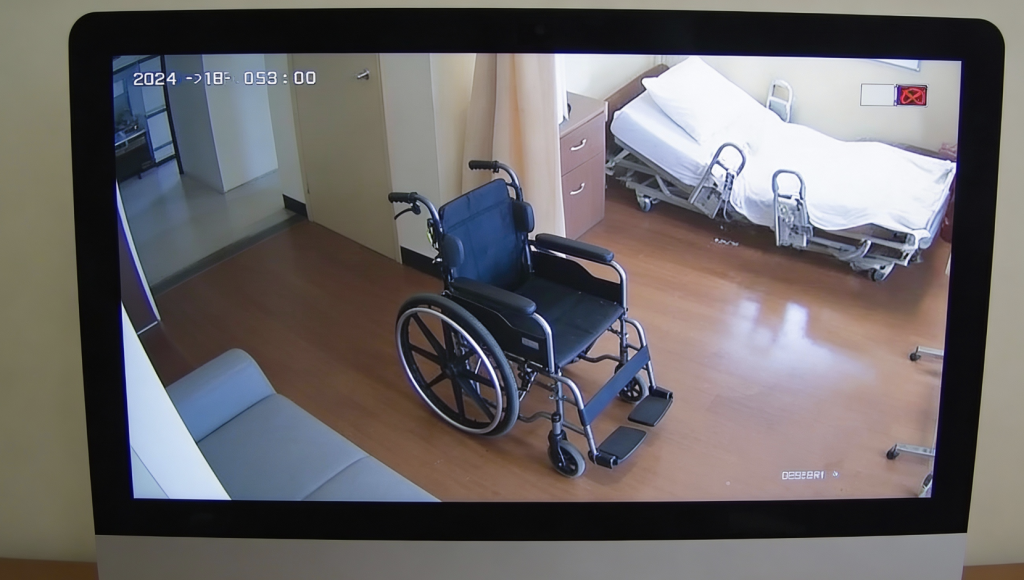
She didn’t get the water. Instead, she walked over to the wheelchair and shoved it hard. Mom tipped forward, tumbling onto the carpet with a sickening thud. I screamed “NO!” at my empty office, helpless to stop it.
Nicole didn’t help her up; she just stood over my mother, arms crossed, watching her struggle to crawl. I grabbed my keys and sprinted to the car, dialing 911 while driving 90 mph down the highway.
The Interrogation
By the time I skidded into the driveway, police cars were already swarming the house. They found Nicole in the kitchen, acting completely surprised and playing the victim.
“I don’t know what happened! She fell! I tried to catch her!” she cried, putting on an Oscar-worthy performance. I didn’t say a word; I simply walked up to the lead officer and handed him my phone with the video file open.
The color drained from Nicole’s face as the officer watched the footage. The handcuffs clicked—a sound that was music to my ears—and she was led away.
But the story didn’t end at the police station. Under intense interrogation, Nicole finally cracked, revealing that she wasn’t just a cruel caregiver; she was a mercenary on a mission.
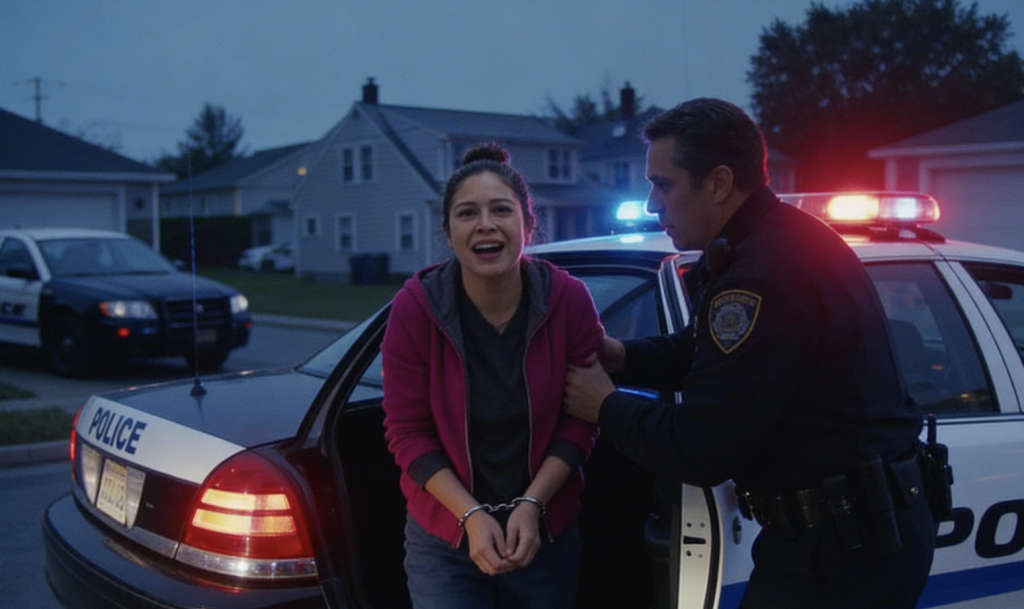
“She has money!” Nicole screamed at the detectives. “She has a stash hidden in the house! I just needed to scare her into telling me where it is!” We were stunned because Mom lived on a modest pension and didn’t have a “stash.”
Nicole insisted she had “intel” from a partner who told her exactly how to break my mother down. The police seized Nicole’s phone and found the number she had been whispering to. When the detective told me who the number belonged to, the room spun.
The Snake in the Grass
The number belonged to Mark. Mark was my father’s best friend, a man who had been coming to our Sunday dinners for twenty years and was “Uncle Mark” to my kids.
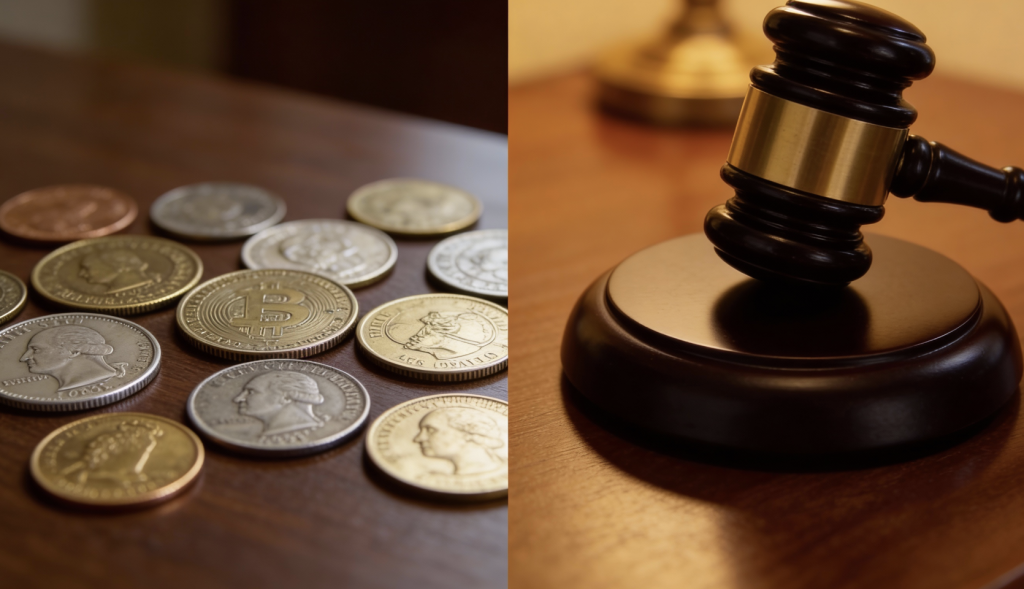
He knew everything about our family, including the layout of the house and the fact that Dad had left Mom a small, sentimental collection of rare coins—not worth millions, but enough to make a desperate man greedy.
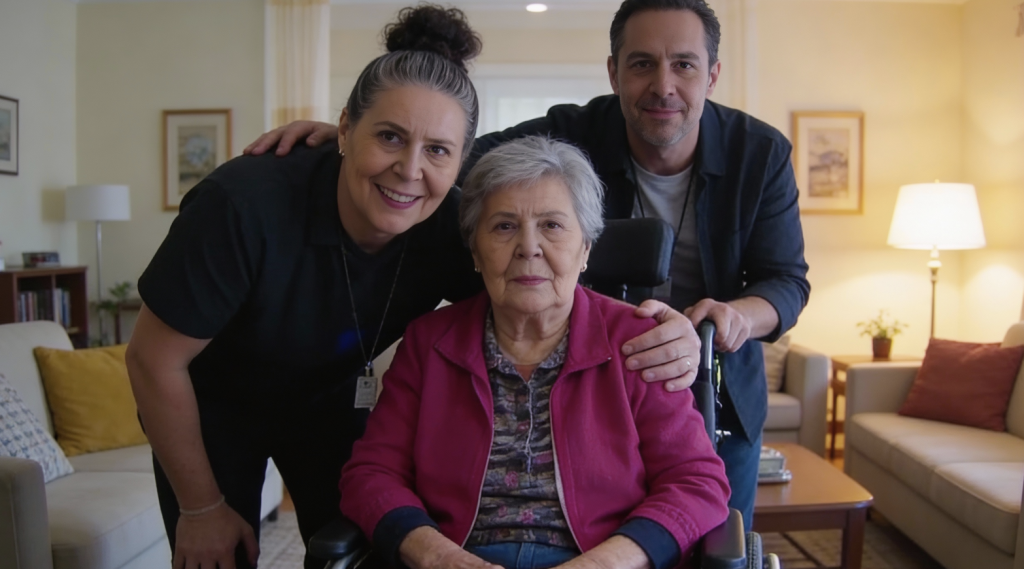
Mark was revealed to be a con artist who preyed on the elderly. He had recruited Nicole, trained her, and sent her into our home to torment the widow of his best friend.
He was arrested the next morning while sipping coffee on his porch, completely unaware that his plan had crumbled. Both Nicole and Mark are now behind bars, awaiting trial for conspiracy and elder abuse.
Mom is safe now. We moved her into a top-tier assisted living community that Loretta and I vetted personally. She’s gaining weight back, and the bruises are fading, but the emotional scars of being betrayed by a best friend take longer to heal. We installed cameras to catch a stranger, but we ended up catching a friend.