
Entertainment Story
By Fiveupdates Editorial Team
May 4, 2026
The arms race has long transitioned from the realm of brute force and sheer numbers into the era of hyper-advanced technology. Today’s U.S. military is no longer just about boots on the ground and standard-issue rifles; it is a sprawling ecosystem of multi-billion-dollar projects that look like they were pulled directly from a Hollywood sci-fi storyboard.
From radar-evading ghost ships to silent drones tracking targets from the edge of the stratosphere for days on end, modern warfare is a high-stakes game of innovation. Let us take you behind the classified doors of the military-industrial complex to look at the most expensive, lethal, and outstanding machines on the planet.

The U.S. military’s technological dominance comes with a trillion-dollar price tag
Rulers of the Oceans: Floating Fortresses and Ghost Ships
The modern U.S. Navy relies on a lethal combination of overwhelming firepower, stealth, and autonomous technologies.
At the absolute top of the financial hierarchy sits the USS Gerald R. Ford aircraft carrier. With a staggering price tag of $13.3 billion, it holds the title of the most expensive warship in human history. Stretching 1,106 feet long, this leviathan features next-generation electromagnetic catapults to launch jets faster than ever before. It is not just a ship; it is a sovereign, floating American city.
While the Ford projects open dominance, the USS Zumwalt destroyer ($7 billion) is a masterclass in deception. Thanks to its radical, angular design, this massive 600-foot warship registers on enemy radar as nothing more than a small fishing boat. It also boasts a powerful electromagnetic railgun capable of launching projectiles at hypersonic speeds.
Beneath the waves lurks the ultimate silent threat: the Virginia-class nuclear submarines ($3.4 billion each). These are the Navy’s “silent shadows,” utilizing cutting-edge acoustic reduction technology to stealthily hunt and destroy targets without ever being detected. Above the surface, the USS America amphibious assault ship ($3.4 billion) operates as a universal forward operating base, seamlessly combining the functions of a transport hub, a rapid-repair facility, and a fully-equipped floating hospital for Marines.

The $7 billion USS Zumwalt was designed to remain virtually invisible to enemy radar systems.
Dominance in the Sky: From “Flying Wings” to Heavy Haulers
Air superiority is the cornerstone of American military doctrine, and owning the skies does not come cheap. The aviation fleet combines invisibility, extreme speed, and colossal payload capacity.
The Northrop Grumman B-2 Spirit ($2 billion) remains a marvel of aerospace engineering. Thanks to its iconic “flying wing” design, it slips through sophisticated air defenses completely unnoticed. Its exhaust and engine systems are so heavily muffled that the bomber is only heard when it is already directly overhead, delivering its payload.
For air-to-air dogfights, the F-22 Raptor ($350 million) is an unrivaled apex predator designed to secure absolute air superiority. Meanwhile, the F-35 Lightning II ($80 million) serves as the versatile, mass-produced multirole fighter that has become the gold standard for the U.S. and 13 allied nations.
Global logistics rely heavily on the massive Boeing C-17A Globemaster III ($328 million). For more versatile, rapid-response transport, the Bell Boeing V-22 Osprey ($70 million) tiltrotor defies gravity—taking off vertically like a helicopter but flying at the high altitudes and speeds of an airplane. The Marine Corps handles its heaviest lifting with the monstrous Sikorsky CH-53K King Stallion ($131 million), while the legendary AH-64 Apache ($13 million) continues to provide devastating close-air support for ground troops.
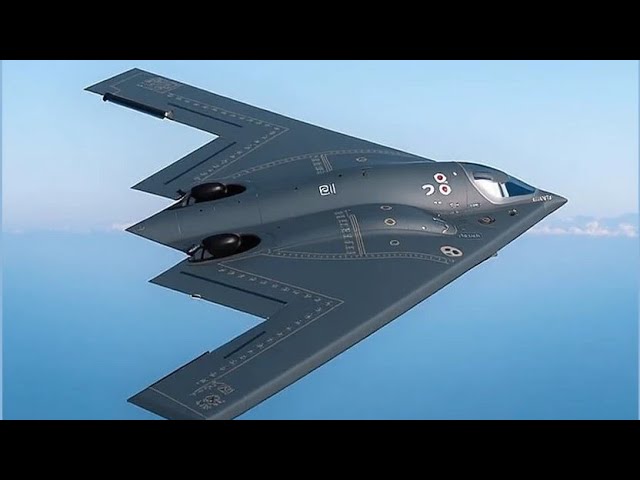
The B-2 Spirit stealth bomber looks like an aircraft from the 22nd century.
The Drone Era: Ruthless Hunters of the Sky
The war of the future has already arrived, and the pilots are sitting in air-conditioned bunkers thousands of miles away.
The MQ-9 Reaper ($56.5 million) is the military’s ultimate hunter-killer. It can loiter silently over a target for 24 hours, broadcasting high-definition video to commanders before delivering a surgical missile strike. For global, high-altitude reconnaissance, the military utilizes the MQ-4C Triton ($120 million), a massive surveillance drone equipped with powerful Rolls-Royce engines.
However, in the fast-paced world of military tech, even cutting-edge gear ages quickly. The high-altitude stealth drone RQ-4 Global Hawk ($176 million) is facing an early retirement; Pentagon analysts predict that in future peer-to-peer conflicts, even an operating altitude of 60,000 feet won’t save it from next-generation surface-to-air missiles. Instead, combat support drones are taking center stage, such as the Boeing MQ-25 Stingray ($21 million), an innovative unmanned aircraft designed specifically to refuel fighter jets mid-flight.
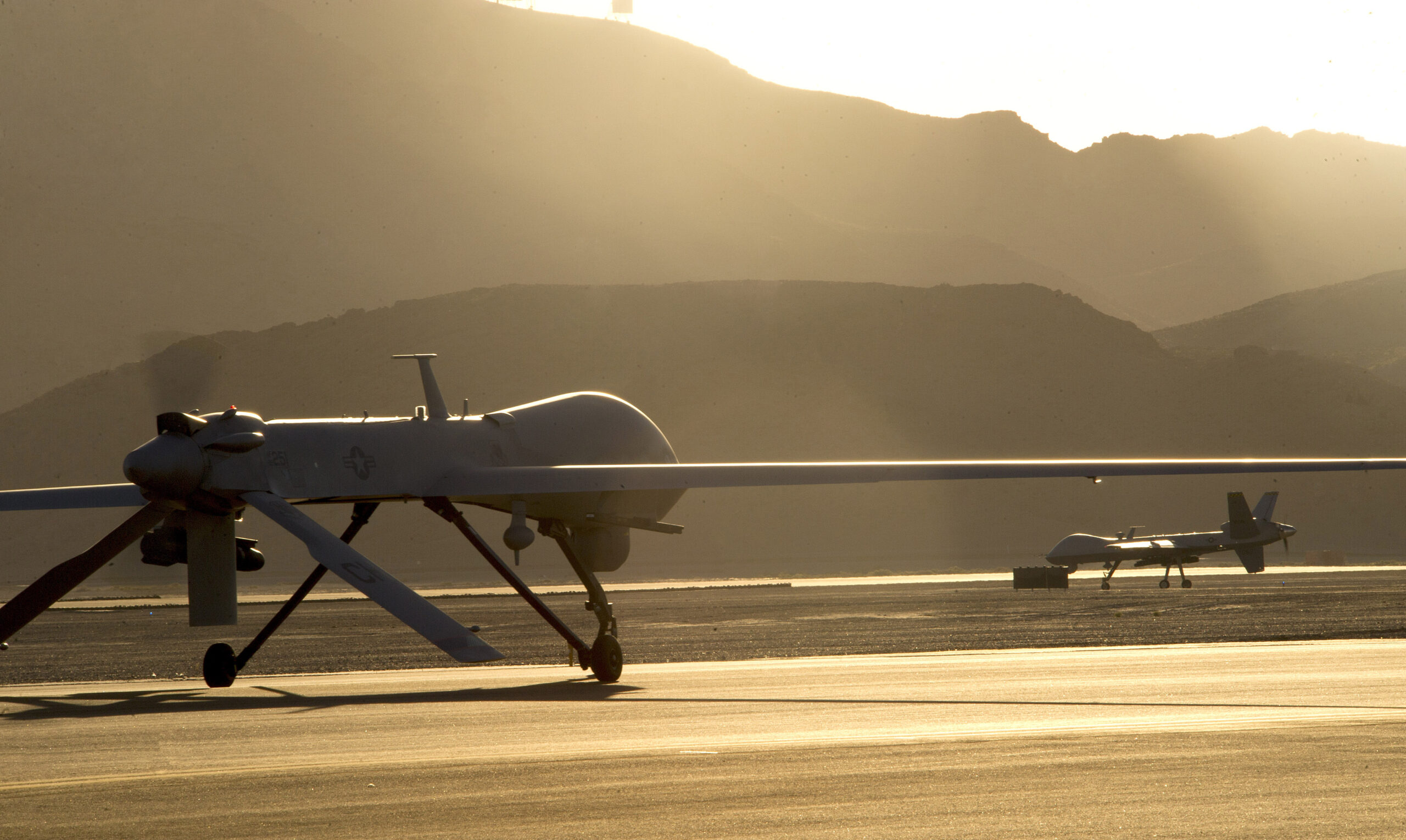
Unmanned aerial vehicles like the MQ-9 Reaper have completely rewritten the rules of modern combat
The Steel Fist on Land
While the skies and oceans feature the most futuristic concepts, the ground domain is ruled by heavily armored, battle-tested steel.
The M1A2 Abrams Tank ($6.2 million) has been the undisputed king of ground operations since the 1990s. Constantly upgraded with advanced optics and depleted uranium armor, it dominates the battlefield with its devastating 120mm smoothbore main gun.
To protect troops in the chaotic, unpredictable environment of asymmetric urban warfare, the Department of Defense rapidly developed MRAP (Mine-Resistant Ambush Protected) vehicles ($1 million each). Their raised, V-shaped hulls and ultra-thick armor plates have saved thousands of American lives by successfully deflecting the explosive force of landmines and IEDs during conflicts in Iraq and Afghanistan.