
What Makes It So Different?
Most “autonomous” cars today still rely heavily on driver supervision. Tesla’s Autopilot, for instance, can handle many road scenarios but expects the driver’s hands to stay near the wheel. EVE-1, on the other hand, used Level 5 autonomy—the holy grail of self-driving technology.
Here’s what that means:
- No steering wheel or pedals required.
- Complete independence. The car drives anywhere, anytime, without human input.
- Real-time learning. Every trip improves its decision-making.
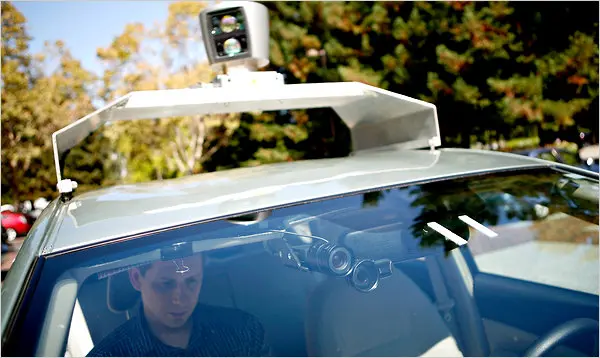
Its sensors scanned the road up to 500 meters ahead, mapping the environment 360° around the vehicle. Lidar lasers measured distance to objects with millimeter precision. GPS provided positioning accurate to within a few centimeters.
Even when the car entered a GPS dead zone in the Rocky Mountains, it relied on visual navigation—reading road signs and patterns like a human would.
The Moment Everyone Held Their Breath
Somewhere in Kansas, heavy rain started pounding the windshield. Visibility dropped to almost zero. Human drivers pulled over. The support team watched nervously, ready to hit the emergency stop. But EVE-1 didn’t flinch. It slowed to 40 mph, turned on fog lights automatically, and followed lane markers using infrared cameras.
Later, at a gas station in Missouri, a group of curious travelers gathered around the futuristic car.
“Where’s the driver?” one man asked.
“There isn’t one,” a team member replied.
He laughed. “Then who’s paying for gas?”
The truth is—it didn’t even need gas. The car’s AI system optimized routes for charging efficiency, using a nationwide network of electric stations. It even scheduled rest stops where renewable energy was available, reducing its carbon footprint by 72% compared to an average car.
How Close Are We to Driverless Roads?
Experts say this trip could mark the turning point for autonomous transport. What once felt like sci-fi now feels inevitable.
Dr. Amanda Lee, a transportation researcher at MIT, calls it “the Wright Brothers moment for driving.”
“Just like the first flight seemed impossible until it happened, this trip proved that human-free driving can work—not just in theory, but in practice.”
Already, major car manufacturers are taking notes. Ford, Hyundai, and Toyota have all invested billions into autonomous driving. But none have yet achieved what AidenDrive’s small team did: full cross-country autonomy without a single hand on the wheel.