
Safety Stats That Turn Heads
One of the biggest fears around self-driving technology has always been safety. But numbers tell a different story.
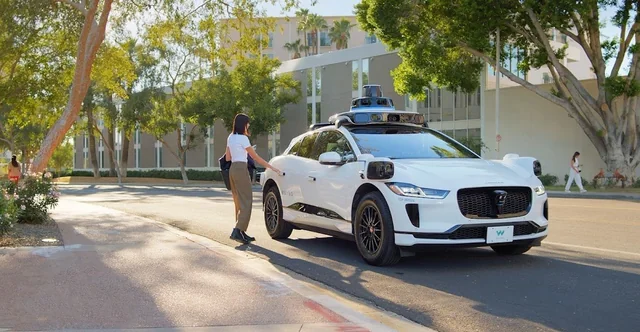
During its coast-to-coast journey, EVE-1:
- Avoided all potential collisions detected by its radar system (over 300 instances).
- Maintained an average reaction time of 0.05 seconds, compared to 1.2 seconds for humans.
- Adjusted to sudden traffic slowdowns automatically—without over-braking once.
Perhaps the most striking metric:
It never exceeded the speed limit—not even by a single mile.
The AI had no ego, no road rage, no distraction. It just followed logic and safety.
The Human Side of a Driverless Future
But not everyone is cheering. For professional drivers—truckers, taxi operators, and delivery workers—this kind of technology represents both fascination and fear.
If machines can drive perfectly, where does that leave humans who make a living behind the wheel?
Experts predict over 3 million jobs could shift or vanish within two decades as driverless fleets take over logistics and public transport.
Still, advocates say it’s not about replacing people—it’s about saving lives.
Over 1.3 million people die in car crashes every year, with 94% caused by human error. If self-driving cars can even cut that number in half, millions of families would be spared tragedy.
“It Felt Alive”
When the AidenDrive team finally arrived in New York City, they said it was emotional. “It felt like watching your kid graduate,” said co-founder Raj Patel. “You build this thing, teach it, test it—and then one day it does something no one thought possible. It drives itself across the country.”
The team stood on a street corner as EVE-1 rolled to a perfect stop. Pedestrians snapped photos. Someone shouted, “That’s wild!” Another said, “I thought these things were still in testing!”
Raj smiled. “They were. Until today.”
The Road Ahead
AidenDrive isn’t the only player in the game. Waymo is expanding its driverless taxi program in Phoenix and San Francisco. Tesla continues pushing updates that make Autopilot more capable every month. Cruise is testing fully autonomous delivery vehicles.
But what sets EVE-1 apart is trust. It didn’t just prove a car can drive itself—it proved it can do it responsibly, efficiently, and safely.
The company now plans to launch a limited pilot program in select U.S. cities, allowing customers to book driverless rides by 2026. Insurance companies are already preparing new policies for “AI drivers,” and some states are updating traffic laws to recognize non-human operators.
A World Without Steering Wheels?
It sounds strange—but experts say it’s coming faster than anyone expects. In a decade, children born today might never learn to drive at all. Instead, they’ll summon cars the way we order food—press a button, and an autonomous vehicle silently glides up to the door.
Roads could become safer, traffic smoother, and commutes less stressful. But it will also mean giving up control—trusting a machine with your life every time you travel.
For some, that’s thrilling. For others, terrifying.
But just like the first elevators once needed human operators to reassure passengers, one day we’ll step into cars that drive themselves without a second thought.
The Final Mile
As EVE-1 powered down in the middle of Manhattan, surrounded by flashing cameras, one of the engineers placed a sticker on the rear bumper. It read:
“No Driver. No Problem.”
It wasn’t just a slogan—it was a statement.
Because for the first time in history, a car didn’t just take us somewhere.
It took us into the future.